Of course our day’s are more than just a single thing.
I’ve found freedom and success doing just one thing at a time.
If it’s developing a training, I do just that for a time period.
If it’s watering the garden, I don’t worry about what’s next.
If it’s reading a necessary book, I do that and nothing else.
To keep it all straight, make a list. Pick one thing on that list. Set a goal and a time. And do one thing.
My most commonly used app right now is my timer app on my phone. “Hey Siri, set a timer for 15 minutes….34 minutes…3 minutes…
This lets me focus on that one thing because I know my phone will tell me when it’s time for something else.
My goal for that time, reading a certain number of pages, making it to a certain milestone in a project, knocking out all the dishes…this helps ensure it’s productive. When I don’t meet the goal, I set the timer longer or it is what it is for the moment.
List. Goal. Time. This has helped me with mindfulness…being focused and aware simultaneously.
When I’m driving and someone cuts me off, I often honk and yell at them so they know what they did was wrong to me!
I may even speed alongside them and pass them to prove that I was wronged and take my control back.
I’ve even justified to my family that I honk at them because they need to know what they did was wrong!
What I’m missing is that in those moments, the people in the car with me (whom I always care about more than the person who cut me off) will likely feel unsafe or uncomfortable when I do this.
I’m so focused on justifying what was done in the past that I’m jeopardizing my future.
We may do this with our work and relationships at work.
Someone sees a situation a certain way and we defensively refute the situation from our perspective. All the while pushing that person and others away from us.
Instead, how do you take what comes your way and mindfully proceed considering all those invovled.
This takes a lot of humility and awareness. Be sure your rhythms set you up to be in a humble and aware state.
For me it is: …not gotten so frustrated about something so small. …realized someone needed something else. …seen the connection between what they said and what someone else referenced. …done the work that mattered most instead of simply what was in front of me.
How do we get this added insight?
There’s no shortcut. We must make time for it.
For me the most powerful and time effective solution is a journal keeping rhythm.
As with any rhythm of mine, it is not about doing the same thing every single day but valuing the practice enough that I have a rhythm of engagement.
For example, I did not journal at all this past weekend but this morning, I jotted down a few ideas I had over the weekend. This afternoon as with most afternoons this week I will spend at least 15 minutes writing in my journal. Sometimes I pick it up in the middle of the day or print out a picture I like and paste it in.
It felt more like a routine at first. I found value in it enough that it showed up more regularly and was actually a rhythm. There was a piece of conquering my will when first trying out but eventually it was purely something the deeper parts of myself were drawn to.
Keep a journal. If it serves you well. If it doesn’t find another rhythm that helps you build insight and awareness. If each of us were a tad more aware, we’d all be better off.
Inspired by this added push to journal keeping by Harvard Business Review Article I came across. It gives a few good steps to try to get started as well as a few ‘trigger questions.’ More of my posts on journal found here…I tend to write about it a lot because it’s truly been valuable to me.
Austin Kleon says “what the virus really destroys is our sense of time. Days feel like weeks. Months feel like seconds.”
I agree that the routine, being restricted, feeling on edge often has removed my normal sense of time.
As I proceed, I’m going to be paying more attention to my body and the environment around me to notice things passing.
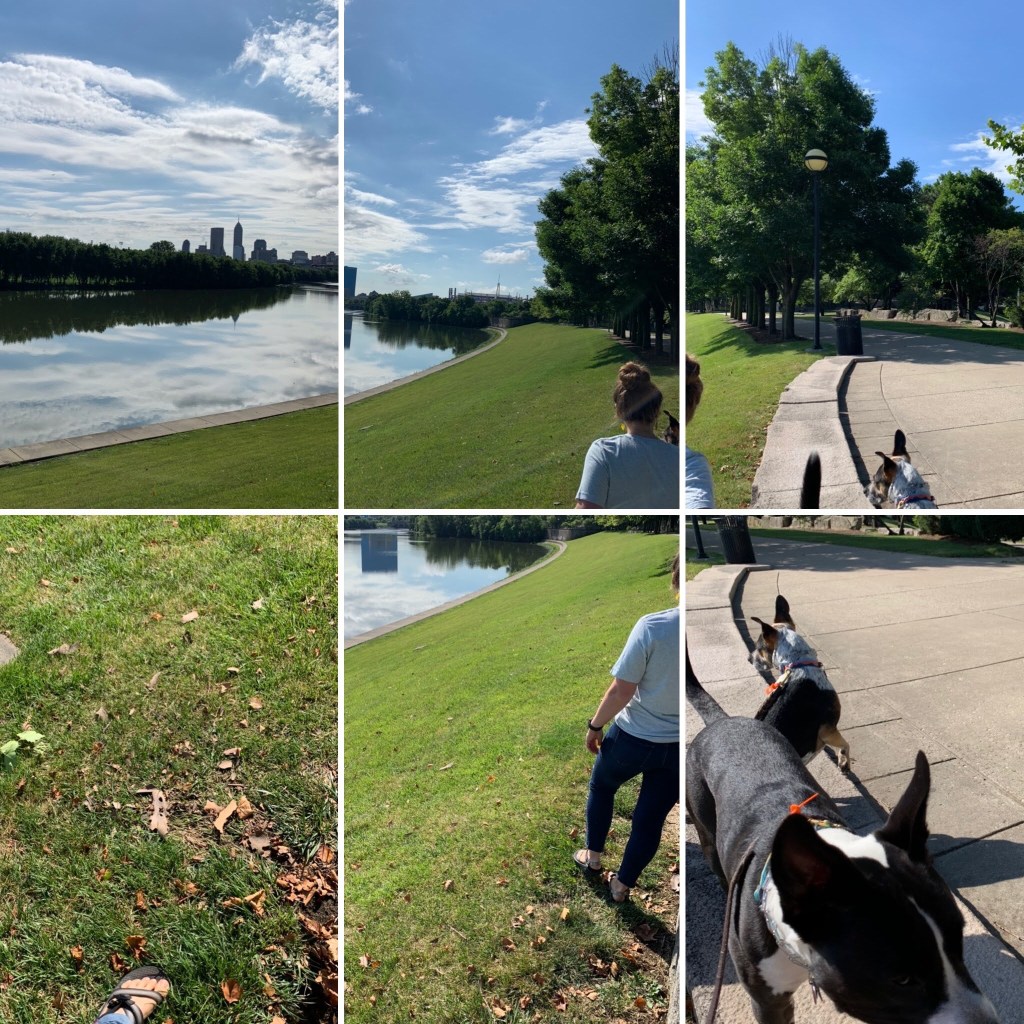
Rather than a click of a watch, I’ll listen for my heartbeat or a pace of breathing. Rather than waiting for an computer reminder for a late morning meeting, I’ll look for the sun to stop shoning directly into my East facing office window. Rather than look at the clock to find when to start making dinner, I’ll simply make dinner after an evening walk with the dogs.
These are less about routine and more about rhythm. Rhythm can change structure and tempo.
There is still familiarity in rhythm even if it switches around.
Check out Weather Report’s Birdland. One of my favorite jazz songs as it varies throughout the track yet carries with it a familiar and predictable return to its rhythm.
Beware the illusion of time. Do what matters. Be you.
And sometimes we just need a beat between songs. Take time to buck the routine and get in touch with your own rhythm. Take a break.
Since August 2019, I’ve been working remotely from my home office. At first I was scared! I would have described myself as an ultimate extrovert. Some of the best memories are in groups or with other people…seldom have I fondly looked at memories of solitude.
Until now…
I HAVE LOVED WORKING IN SOLITUDE!
It’s been 11 months of my day job being mostly alone and I feel confident, comfortable, and fulfilled. This didn’t happen immediately as I often used my local library or favorite coffee shop as a coping mechanism when I felt alone at the start.
Then COVID-19 hit and everyone was working from home and those coping mechanisms were taken away.
I galvanized, doubled down, dug into working in solitude. I built a sorts of bliss station in my office and developed a routine and rhythm for my day.
It also helped knowing the rest of the world was experiencing something similar. I saw many others pontificate their work from home status and how they missed their office mates. I didn’t relate to that much. And that surprised me. I thought I was the ultimate extrovert.
I still am an extrovert but the others I get my energy from are virtual, in books, and in my own head. I also have times where I see friends and family, which energizes me even to the tips of my toes.
Even though I love my rhythm and routine of working in physical solitude and often total solitude for several hours a day, I am realizing I cannot stay so insular. Maybe occasionally have another body in the room…other than my pups who do a great job at reminding me to take a second to bark at notice something outside the window, throw a ball down the hallway, snuggle for a hot second, or take a breath of fresh air.
Having a human body in the room doesn’t mean we are working on the same thing but parallel working. Maybe its a friend to sit with and just chat occasionally or bounce an idea off or see them in the zone spurring me to stay in the zone or see them take a break encouraging me to take a break.
The point here is to find a rhythm but know life is all about transitions. Jive in the beat but be on the lookout for a new melody.
Meditation or other mindfulness practices seem daunting. How can you quiet your entire mind!? I don’t have time to sit in silence!?
Each morning I make space for 5 minutes of meditation and it is a habit I cherish each day as a workout to increase my mindfulness.
Mindfulness helps us create an internal environment suitable for high effective work and living. Helps us regulate our emotions, build resiliency, increase our ability to focus, make us more aware of subtleties around us…
Meditation is a workout. It might even feel stressful at times. That’s the point!
While meditating we should improve our awareness and focus. We focus on a specific object (breathing, phrase…), notice when we lose focus, release that loss of focus, and gravitate back to original object of focus. It’s a workout!
Here’s a simple start to building your own mindfulness practice:
Set a timer for 5 minutes (or more)
Get comfortable sitting. Close your eyes or keep them slightly open.
Bring your attention to your breath. If helpful count each in and our breath and focus on the breathing or counting.
As you gain focus on breathing, lift your focus to what you’re thinking about. Think of it like watching cars move through a four way stop. Acknowledge those thoughts and consider how you feel about them. Notice those feeling and thoughts as if they are moving through the intersection and outside of yourself.
When you want to release a thought, simply imagine yourself blowing a bubble and release the thought and emotions as if they were a bubble floating away. If they come back, let them sit and then release them again.
Bring your attention back to your breath as needed and as your focus gets too busy.
Repeat the cycle.
The goal is to have a mental workout. Help your mind grow in its ability to be simultaneously aware and focuses.

 phil invites