Address the Emotional Root Cause

Stress we might feel. Frustration buried under the surface. Worry simmering around the corner.

These all hold us back from the freedom of good work and joy of a grateful life.

Of course stress, anger, and caution can motivate is to work effectively…

…but I’m talking about the stress keeping you in the office through dinner, the frustration that comes out on those you love, the worry causing you to check your work email when you can’t sleep at 1am.

Build a rhythm to address the emotional root cause. Addressing that will help separate from work or tasks through the day and lead to the life we really want.

I use mindfulness exercises, physical exercise, and journaling but you should find a rhythm that works for you. Only you can do it and I think we each must do it.

Insight by Keeping a Journal

If I had more awareness I could have….

Fill in the blank for whatever you want.

For me it is:
…not gotten so frustrated about something so small.
…realized someone needed something else.
…seen the connection between what they said and what someone else referenced.
…done the work that mattered most instead of simply what was in front of me.

How do we get this added insight?

There’s no shortcut. We must make time for it.

For me the most powerful and time effective solution is a journal keeping rhythm.

As with any rhythm of mine, it is not about doing the same thing every single day but valuing the practice enough that I have a rhythm of engagement.

For example, I did not journal at all this past weekend but this morning, I jotted down a few ideas I had over the weekend. This afternoon as with most afternoons this week I will spend at least 15 minutes writing in my journal. Sometimes I pick it up in the middle of the day or print out a picture I like and paste it in.

It felt more like a routine at first. I found value in it enough that it showed up more regularly and was actually a rhythm.
There was a piece of conquering my will when first trying out but eventually it was purely something the deeper parts of myself were drawn to.

Keep a journal. If it serves you well. If it doesn’t find another rhythm that helps you build insight and awareness. If each of us were a tad more aware, we’d all be better off.


Inspired by this added push to journal keeping by Harvard Business Review Article I came across. It gives a few good steps to try to get started as well as a few ‘trigger questions.’ More of my posts on journal found here…I tend to write about it a lot because it’s truly been valuable to me.
Redefining Narratives

We tell ourselves stories all the time. These narratives can be subconscious or we might be aware through mindfulness, journaling, reflection, outside perspective.

Once we realize we are telling ourselves a narrative that is not constructive to where we seek to go, we must replace it with a more ideal narrative.

I’ve found the practice of journaling to help with this.

I write out the current narrative I’m noticing.
Cross it out.
Write a more ideal narrative to replace it.

This ideal narrative doesn’t need to perfect or full proof. It simply needs to one little step better.

An example:

I need to do more to get to where I want to be.
Who I am is enough and I am putting in the work to get to where I want to be.

How I Journal (right now)

Keeping a journal and the active practice of journaling has been a critical piece of my own growth and mindfulness.

I increase my own ability to reflect and be aware of what was and what is and what is to come. By looking back or looking ahead, I grow in awareness. I also grow in focus by looking specifically at a certain moment or experience.

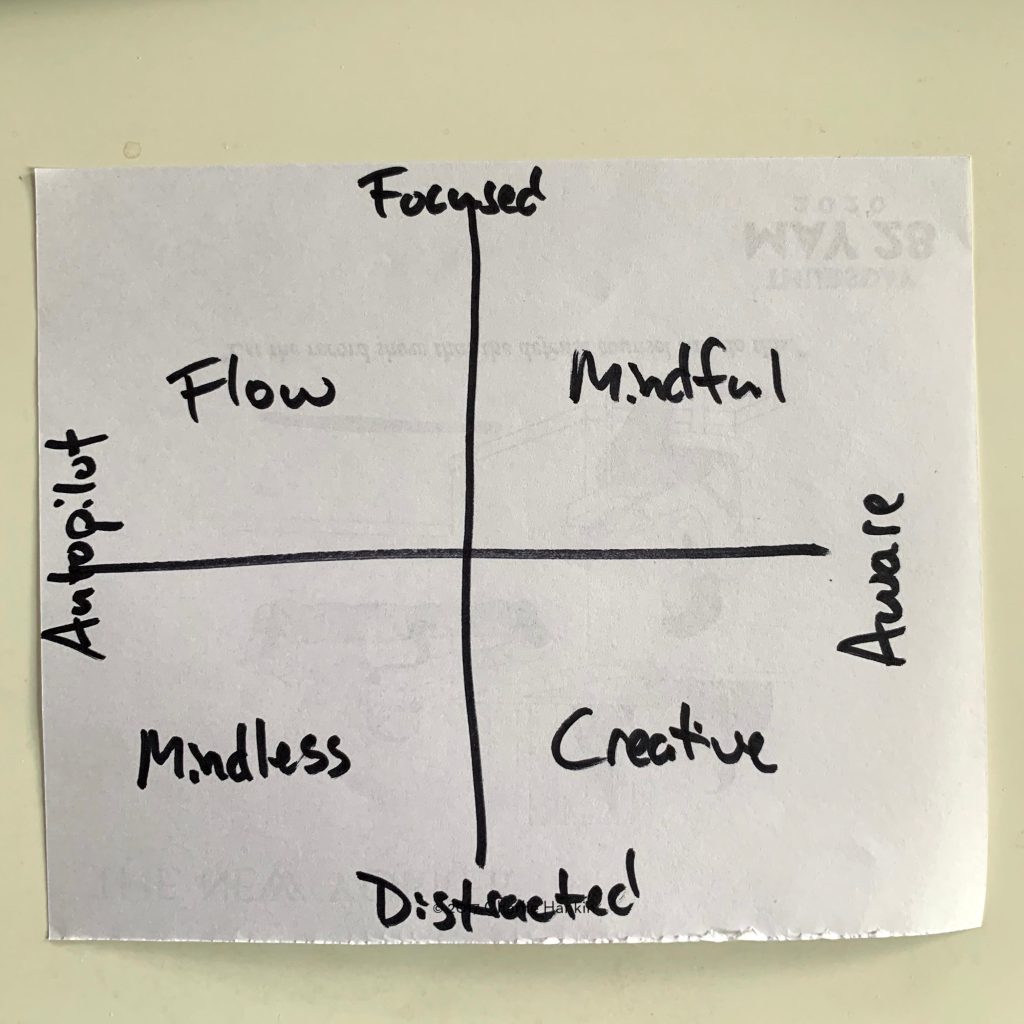
In The Mind of the Leader, they identify mindfulness as a combination of heightened awareness and heightened focus.

Journaling helps me operate in the Mindful category more effectively.

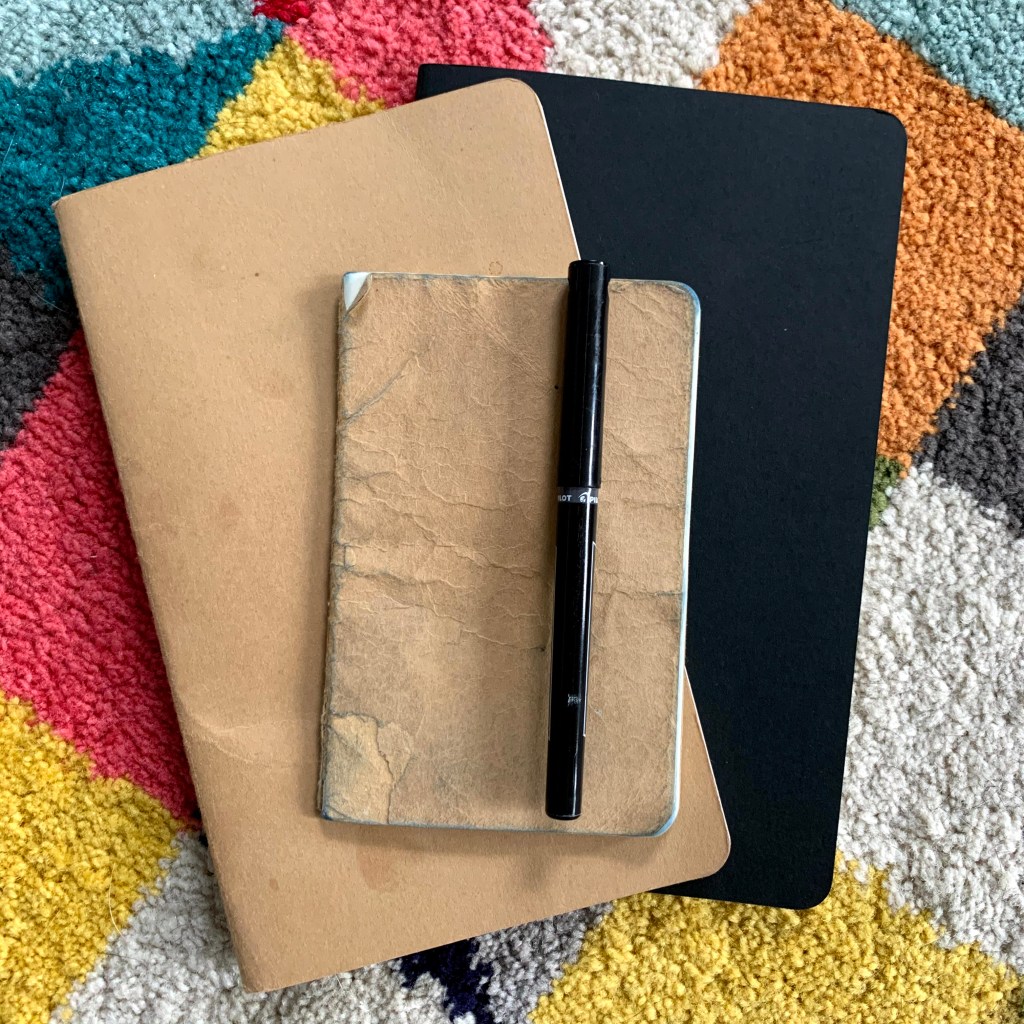
I have 3 distinct journals and ways I use them to keep a journal and journal practice:

  1. Pocket notebook: Small Moleskine notebook I keep in my back pocket with me at all times. Pen in my pocket to write down little ideas I have them or things that stick out in a podcast, book, random conversation. When I stop to write in my formal diary each day, I reflect on notes I wrote in it that day and day before.
  2. Note taking notebook: Large sized Moleskine notebook I bring with me if I’m intently reading something, going to a meeting, or need a place to track more thorough note like ideas or topics. I will typically take a photo of this and load it into my Microsoft OneNote in some sort of order for log. I also keep this next to me and check it as I do my formal diary each day.
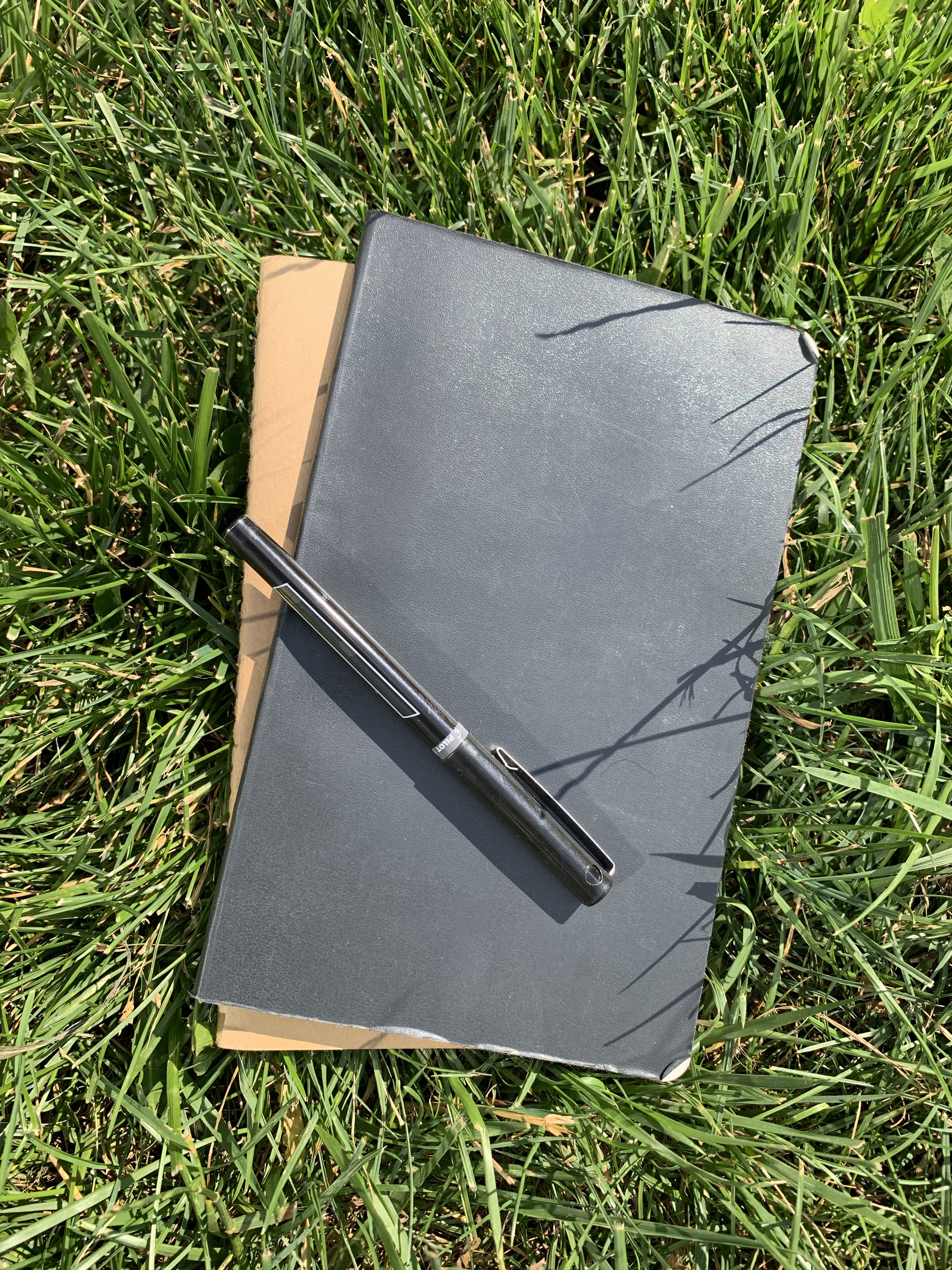
  3. Formal diary: Large sized Moleskine Notebook (black in picture). Eventually will migrate to a hard covered notebook. This is where I write each day at the end of my work day and reflect on what stood out. Throughout the day I’ll pull it out and jot down more reflective thoughts. I make a point to fill at least 1 page in it each workday. I try to do this on the weekends also but find it’s important for me to be lax on weekends. This is where the depth of my mindfulness increases in keeping a journal. I expand upon thoughts I might not share but want to dive into. I take those ideas and sometimes will formulate a blog post on it or use it in coaching or training. I also paste pieces of magazines or things I print out into it. Right now I’ve been taking pictures of a specific scene and joining them together into a collage as a ‘joiner‘.

This practice will evolve and change over time but I intend to continue a habit that increases my own awareness and focus.

A Journal is a Key Tool

Just like a hammer is necessary if you’re framing a house. A drill is necessary to do woodworking. A key is necessary for opening a door.

A journal is necessary to developing ourselves.

We can use the back of a screw driver to knock in a nail every once and a while but if we have to hit nails day after day, we’d better have a hammer.

We might act similarly using our memory as the screwdriver to temporarily drive home our own development. Nothing replaces the act of journaling.

Journaling or keeping a diary is a reminder that development is more than a 1 hour every month thing. It is ongoing and process you will partake in every day. It can help you measure growth and development. Journals help you remember what was said or what you thought about. It is a place for you to collaborate with yourself and think as if there were two of yourselves processing information.

Rhythm is important.

If you do not know where to start, begin with gratitude or what you are proud of for the day and let it grow from there. It doesn’t have to ever be perfect or complete, it just needs to be you. It never needs to be shared or explained or just needs to resonate with you.

Inspired by Austin Kleon’s thoughts on why he keeps a diary