When I’m driving and someone cuts me off, I often honk and yell at them so they know what they did was wrong to me!
I may even speed alongside them and pass them to prove that I was wronged and take my control back.
I’ve even justified to my family that I honk at them because they need to know what they did was wrong!
What I’m missing is that in those moments, the people in the car with me (whom I always care about more than the person who cut me off) will likely feel unsafe or uncomfortable when I do this.
I’m so focused on justifying what was done in the past that I’m jeopardizing my future.
We may do this with our work and relationships at work.
Someone sees a situation a certain way and we defensively refute the situation from our perspective. All the while pushing that person and others away from us.
Instead, how do you take what comes your way and mindfully proceed considering all those invovled.
This takes a lot of humility and awareness. Be sure your rhythms set you up to be in a humble and aware state.
Today I started working in my new home office. It’s only the other side of a wall from my old office.
Any work we do, any interaction we have, any relationship we build has context embedded into it. Context shapes our behavior, our interactions, our creativity.
As I set up my new office, I realize space defines context. And therefore space shapes our work, interactions, relationships, creativity…
Es Devlin claims spaces are like protagonists. They become our friends.
David Byrne points out that music is shaped by it’s venue spaces. Ancient chanting was done in cathedrals with wide open spaces where the key and rhythm had to remain consistent and slow. If not, the reverberation would cause dissonance. Motzart played in smaller venues and therefore he could shift keys and play more closely linked notes. African music originated by being played outside. Drums and percussion had to be full, loud, and carry onward with no concern for reverberation dissonance.
Music was shaped by its context.
We need to ensure our spaces are a opportunity for us to shape the context of our work, our relationships, our life.
This preference of space cannot become an excuse for avoiding good, meaningful work but instead spurs us into deeper creation, power, impact.
Space matters.
A few things I’ve set up in my new office to define my context:
Reading nook with a piece of art remembering a friend of mine who passed away. I start each day here meditating, reading, and thinking. Reminds me of passion, love, and my life theme (Invoking people’s truest selves).
Plush dog named Fin who is my company’s mascot. Reminder that my work is greater than me. My team and I are greater than the sum of our parts. Together we do more than we can apart.
Wilson volleyball from the movie Castaway. This was a gift from my previous boss. Even if I’m in this office alone all day, I’m not alone.
Desk is in a location ideal for light for video calls and allows for fluidity of standing/sitting and moving to other locations in office…reading nook, second desk, looking out window, playing with pups.
A chunk of wood with bark leans against the wall. I’ve been grabbed by the idea of stacks of wood and how combustible they are. Keep adding to the pile.
Tandem bike (mounting on the wall in coming days). Go together. Specifically with Kelly, my wife. Go together with people. You are not alone.
“Analog” desk with butcher paper and mirrors. Mirrors remind me of humanity and focuses on humility. When I sit here to map out an idea I remember it’s not all about me. I remember my limits and the true humanness alive in me.
My espresso machine and all snacks are stored outside my office. I could easily put it up here but having it away from office tells me to be sustained by other than work. Food and drink start outside of my work setting. (But of course I snack on things while in the office)
What spaces currently define your context? How can you shape them?
ONE: Overtly arrogant. Big ego. Everything is about us. Thinking of ourselves often. This is the type we typically think of.
TWO: Lacking self confidence. Deflated sense of self-worth. Everything is about what we cannot do. Thinking of ourselves often This is the type we don’t often think of.
Both types think of themselves often. Both are driven by some sort of insecurity. Humility to me is about our connection to the earth. We come and we go.
Humus is the Latin root of humility. Humus in Latin means, earth.
Recognize our humanity. We are not perfect. We will never be perfect. And yet there is something alive in us.
I’m working to address the insecurity in me that drives me towards both of these types of lacking humility. Right now I think it’s a lot about fear of being stuck. Fear of not stagnation. Fear of irrelevance. Fear of loneliness.
I’ve always enjoyed jazz music…most days it’s playing as I work. This book showed me the depth of the origins of the music and the intricacies inside each song. It’s more than background music and the musicians are becoming my friends in a way.
The a Coaching Habit by Michael Bungay Stainer (I didn’t read it recently but refer to it often)
My connections with people are better by applying what I learned in this. I am less manipulative and more present with people. More from my blogs on this book.
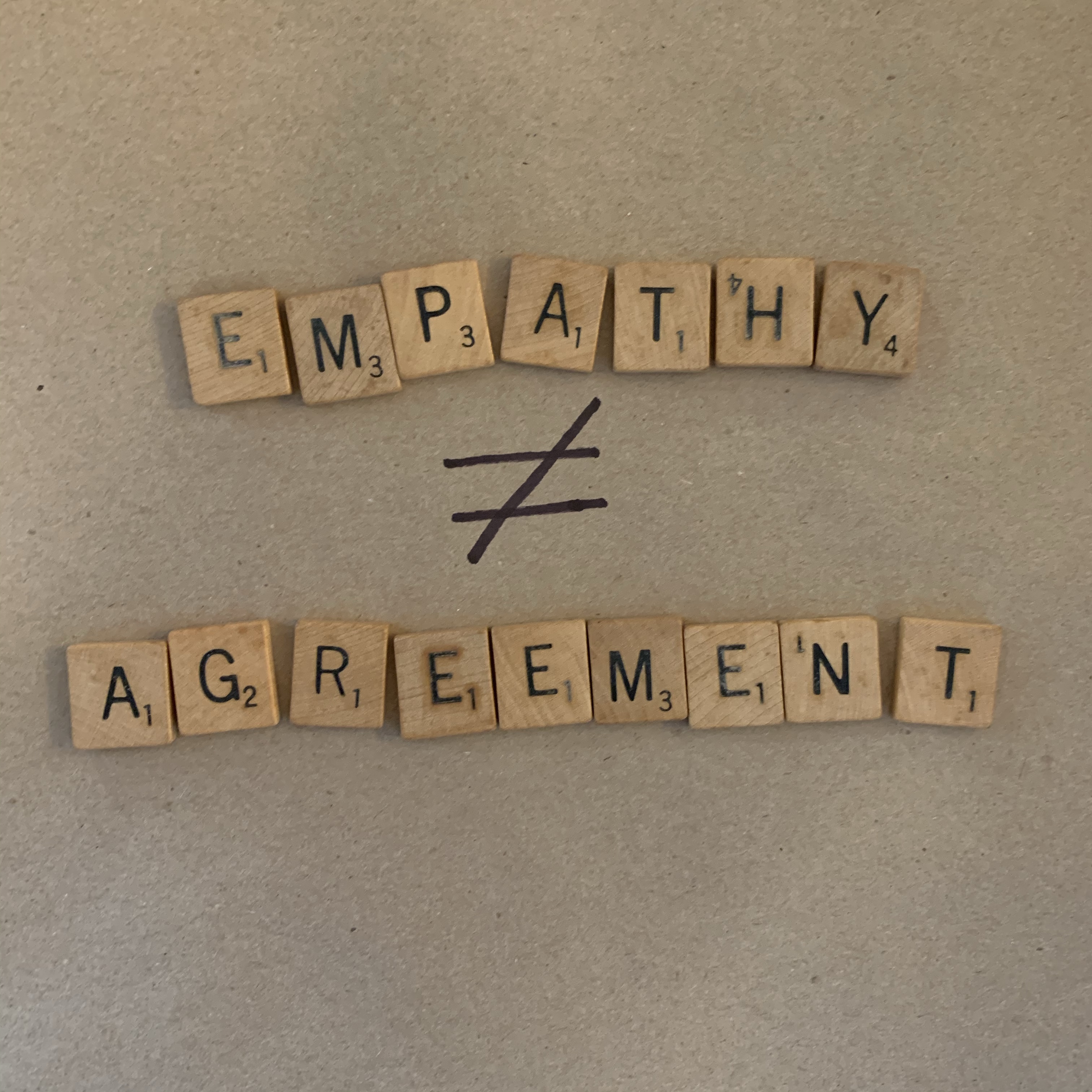
Often I have thought that in order to empathize with someone, I must also agree with them. I realize now, it just takes more work to empathize with someone you don’t agree with.
I can think of TWO reasons we incorrectly believe that empathy equals agreement.
ONE: In high stress situations, our emotions rise to the front without as much regulation. Often I find that my emotions get in the way of these four attributes of empathy.
I may be angry and therefore display that frustration or hold onto that anger so I do not suspend judgement. I may feel hurt myself and therefore hold back the vulnerability to communicate what I understand of the other person.
We must find a ways to regulate our emotions. Ed Batista describes humans as “leaky” in that our emotions cannot be fully held back but we must be able to regulate them. Meaning we need to ensure the emotion we are expressing fits the surrounding culture, give ourselves time sand space to recognize early signs of our emotions to begin processing that, and identify where those emotions rise from in order to ensure we display them appropriately.
TWO: We think if we truly listen to someone else, we may actually agree with them and we don’t want to feel the shame of changing our mind. If we allow ourselves to empathize, it could be psychologically dangerous for us. So we equate empathy and agreement to avoid empathy.
We can step closer to empathy by showing vulnerability ourselves. By demonstrating vulnerability, we allow for processing of our emotions and thoughts. Of course this must be done with tact and with appropriate regulation as described above. When used well, vulnerability can make a tense moment move towards empathy on all sides. If we can’t move it towards empathy, it will naturally go towards shame and get us away from truer understanding and appreciation.
Don’t let shame be the deterrent from more truth and wholeness.
If we hope to be empathetic, we don’t have to agree. Empathy does not need agreement to exist. We can see through a person’s lens, be non-judgmental (and yet still be vulnerable and regulate our emotions), understand someone’s feelings, and find ways to communicate back to them what we understand, all without agreeing with what they say.
I’m searching for more humility in my life. This poem captures beautiful images of humility. It is not necessarily weak. When you see humility like this, you know.
If you must be heard, let it be like the babbling brook, laughing over the rocks.
If you must be seen, let it be like sunlight giving warmth and comfort to all.
If you must be acknowledged, let it be as the eyes behold the skies in all their glory.
If you must lead, let it be like the wind and all its unshackled direction.
If you must learn, let it be like breathing, the natural flow of in and out, and done without thinking.
If you must teach, let it be like the water, deep and flowing, for your words are like pebbles in a pond, the ripples they cause spread out in all directions, and what you give out eventually returns.
“You can accomplish anything in life, provided that you don’t mind who gets the credit.”-Harry S. Truman
What are you doing that laughs in the face of humility? When do you, deep down, laugh at humility? Mock it for its weakness and dismiss it as for only ‘soft’ people?
For me when I do those things, failure or disappointment are right behind.
Humility is a transcendent quality. It requires us to work at it but in some instances, there’s nothing we can do to develop it. It is a characteristic of the titans of our age. It is not soft by any means but rigorous and defining. When paired with a strong will, it is unstoppable and proven to yield success.
Reflect on what you can do to lean into, more humbleness. Not that there’s any discipline we enact to develop humility but the closer we get to it, the more contagious it is.
I recently started leading something new to me at work. I came in with a plan. A plan based on my perception of the group and my boss’ perception. I went in head strong claiming my plan expecting those I lead to “hip hip hooray!”
Needless to say that’s not the reason I’ve gotten especially from the ‘old timers’ in the group.
I neglected to come in with a humble spirit, an understanding ear, a thoughtful strategy. Thoughtful towards those who have the best perception of the group. The ones who have been there.
I missed the opportunity to consider the other when I started. I lacked Integrity of Influence.
Going forward, I’ll be considering the other, reaching out to those in the team before finalizing my plan.
And the next time I start something new, I’ll be cautious to claim my plans for the team…maybe even start without plans and go in ready to listen and act.

 phil invites