Problem: has a solution. Can be solved. Requires brainstorming, problem solving, strategy.
Situation: how it is. Not solvable right now. Requires empathy, recognition, acceptance.
Sometimes we think we have problems but actually have situations. Maybe we can tell if it’s a problem by considering if we are willing to hear advice or not. If not, it’s likely a situation and we need to treat it like one.
Maybe someone will come to you with a “problem” but it’s actually a situation. Recognize it and respond appropriately.
Inspired by Seth Godin’s Akimbo podcast below where he explains this concept in more detail.
Go take a walk
  It is easy to hear your own footsteps,
  the rustling of the leaves you kick,
  the crack of a branch you break.
Listen also to all that is beyond yourself.
  The breeze shaking the leaves,
  a creak of an old tree,
  the quip-quip-quip of an unfamiliar bird.
Be led beyond yourself.
  Sense and feel that which is other,
  consider from where it comes,
  acknowledge, honor, and respect it.
Most of our interactions are best as two way streets.
This does not mean both sides need equal amounts of traffic.
Simply recognizing and remembering that all interactions can be two way streets is a good start. If you acknowledge this, you will look for the traffic coming the other direction.
You may notice the body language or subtle comment someone makes or set up a moment for questions or comments to be added.
The more we build our connections to be two way streets, the better we will be.
Our typical meeting model or conversation model is all surrounding attention.
Now that everyone is in the same room, let me talk at you. Now that you’re done talking, let me tel you a story.
I’ve been forced to refine how I connect with people with increased digital connection. We cannot guarantee we have anyone attention (well we never have been able to but even more evident now).
This requires attaining enrollment.
The other person or people choosing to listen and engage. This type of engagement gains much more success and effectiveness than simply having someone’s attention.
Now that I have you together, I’m going to compel you to hear me out. Now that you’re done sharing, I will ask a question to dive deeper. Now that we are connected, I’m going to add something that you add valuable.
The focus of the interaction is less about us getting our way and more about us creating a space for the other to engage in a way that honors them. It’s service oriented. It’s other focused. It’s empathetic.
Take the chance in front of you to not just someone’s attention but enroll them.
Seek enrollment and gain awareness when you’re only seeking attention.
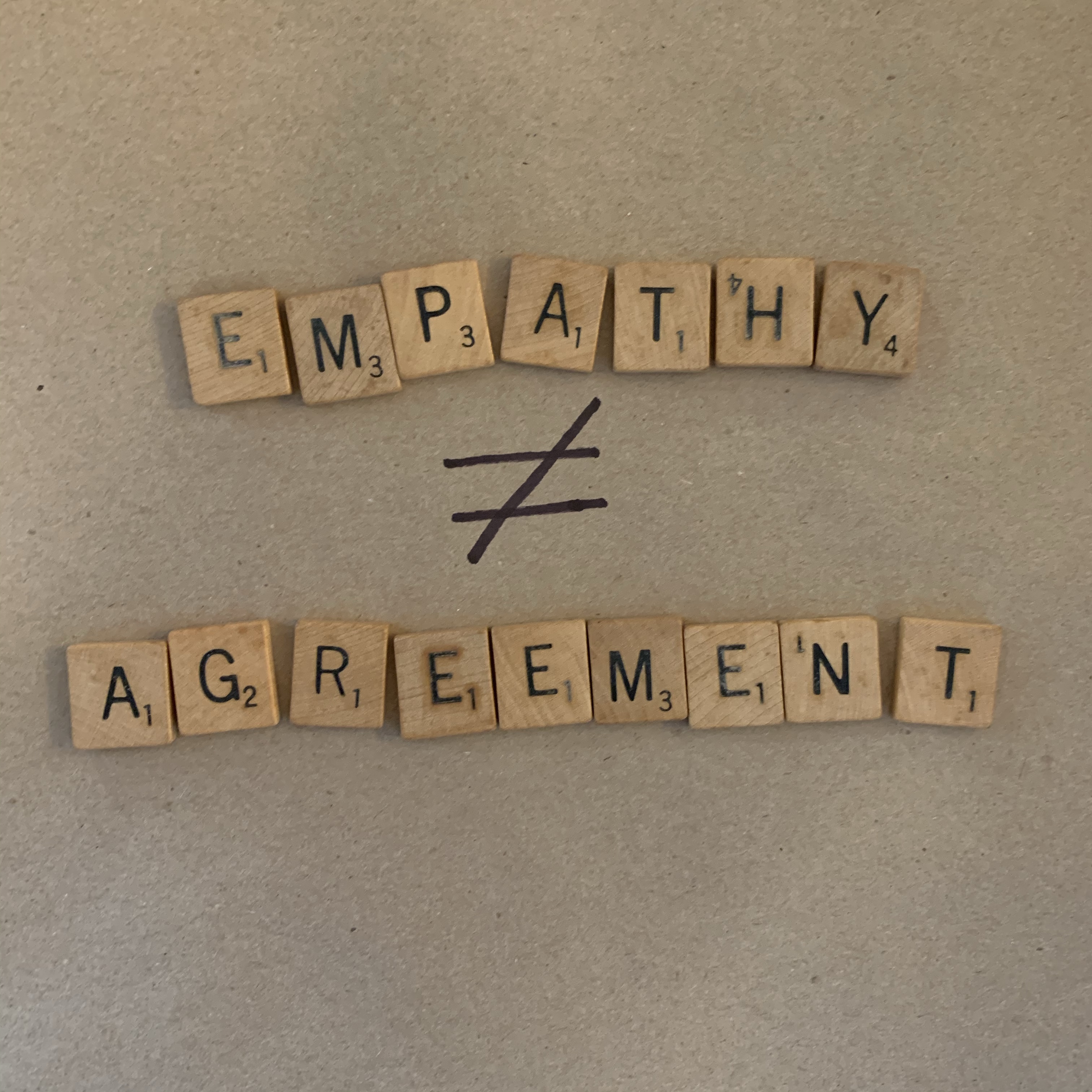
Often I have thought that in order to empathize with someone, I must also agree with them. I realize now, it just takes more work to empathize with someone you don’t agree with.
I can think of TWO reasons we incorrectly believe that empathy equals agreement.
ONE: In high stress situations, our emotions rise to the front without as much regulation. Often I find that my emotions get in the way of these four attributes of empathy.
I may be angry and therefore display that frustration or hold onto that anger so I do not suspend judgement. I may feel hurt myself and therefore hold back the vulnerability to communicate what I understand of the other person.
We must find a ways to regulate our emotions. Ed Batista describes humans as “leaky” in that our emotions cannot be fully held back but we must be able to regulate them. Meaning we need to ensure the emotion we are expressing fits the surrounding culture, give ourselves time sand space to recognize early signs of our emotions to begin processing that, and identify where those emotions rise from in order to ensure we display them appropriately.
TWO: We think if we truly listen to someone else, we may actually agree with them and we don’t want to feel the shame of changing our mind. If we allow ourselves to empathize, it could be psychologically dangerous for us. So we equate empathy and agreement to avoid empathy.
We can step closer to empathy by showing vulnerability ourselves. By demonstrating vulnerability, we allow for processing of our emotions and thoughts. Of course this must be done with tact and with appropriate regulation as described above. When used well, vulnerability can make a tense moment move towards empathy on all sides. If we can’t move it towards empathy, it will naturally go towards shame and get us away from truer understanding and appreciation.
Don’t let shame be the deterrent from more truth and wholeness.
If we hope to be empathetic, we don’t have to agree. Empathy does not need agreement to exist. We can see through a person’s lens, be non-judgmental (and yet still be vulnerable and regulate our emotions), understand someone’s feelings, and find ways to communicate back to them what we understand, all without agreeing with what they say.

 phil invites