Coaching is Like Scaffolding

When we are operating just beyond our comfort zone or current skill level, we benefit from having scaffolding around us.

This is a place for a coach. Someone who can help you consider the next step, provide a push back on track as we get off, help us feel more certain.

Where could a scaffolding coach help you?

Where can you be a scaffolding coach for someone else?

Coaching Round Table: What I Need to Grow

I see a new blog post that intrigues me.
I read a book where I’m feverishly underlining.
I listen to a podcast and I find myself continually going back 15 seconds to write down what someone said.

All this is not enough for me.

In order to truly grow, we must deeply consider and apply ideas and concepts.

This is best done among others.
Hearing and seeing what others are learning.
Getting energized by the way someone else is applying a jointly learned concept.
Being challenged to stretch thinking and imagine beyond your status quo.

Starting mid November 2020, I’ll be hosting a Coaching Round Table.
A space to share what you’re learning, hear what others are learning, and go together to be better.

We will focus on topics around coaching and leadership. However we will break down the walls of considering how this applies to a day job.

“Who we are is how we lead.”

Brene Brown on the Dare to Lead Podcast

If you’re interested to join, complete the form or email me.

We will all be better if you are there. Hope to see you around the table!

Coaching: Helping Someone Solve Their Problem

Key word here: THEIR

Successful coaching is not about telling someone your view of what could be better or giving someone steps to follow. It’s about the person being coached.

They may have an idea of what better looks like. They may ask for your help in defining better. You may have to do some “marketing” to help them see and in turn own the better.

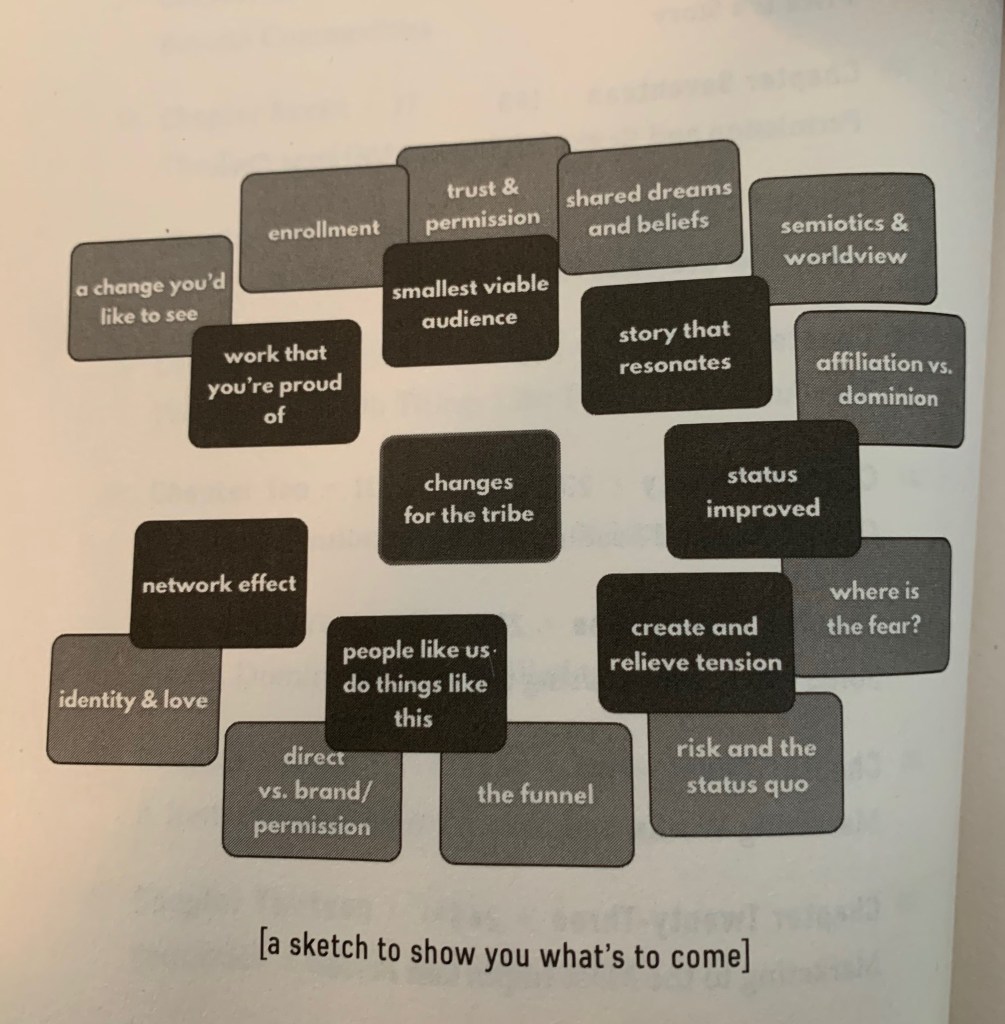
We can use stories, status roles, creating and relieving tension, build culture to help someone adopt and enroll in a journey.

This marketing is not about a website or a logo. It’s about designing the coaching experience for the coachee and helping them solve THEIR problem.


These ideas all are elaborated on in Seth Godin’s This is Marketing. I love the “table of contents” in image below!

“They need to know what they did was wrong!”

When I’m driving and someone cuts me off, I often honk and yell at them so they know what they did was wrong to me!

I may even speed alongside them and pass them to prove that I was wronged and take my control back.

I’ve even justified to my family that I honk at them because they need to know what they did was wrong!

What I’m missing is that in those moments, the people in the car with me (whom I always care about more than the person who cut me off) will likely feel unsafe or uncomfortable when I do this.

I’m so focused on justifying what was done in the past that I’m jeopardizing my future.

We may do this with our work and relationships at work.

Someone sees a situation a certain way and we defensively refute the situation from our perspective. All the while pushing that person and others away from us.

Instead, how do you take what comes your way and mindfully proceed considering all those invovled.

This takes a lot of humility and awareness. Be sure your rhythms set you up to be in a humble and aware state.

Less defensiveness. More fact finding.

Less self protection. More sacrifice.
Preferences not Excuses

We should develop and understand our preferences.

Often I find myself making more excuses than understanding my preferences.

Similar to “even though” vs. “if only,” a simple flip in perspective frees us up.

I prefer to work from my home office and have a set morning routine including coffee, chatting with Kelly, playing with my pups for a second, sitting for 30 minutes to meditate and read and wander in my head…

When this is interrupted, I make excuses that my day didn’t go well because my preferences weren’t meant.

When I turn those preferences into excuses, I only hinder myself, those around me, and the work I do.

Of course I may not be as effective when I don’t get things as I want but more importantly than routine is getting into a rhythm without the routine.

Rhythm over routine. Rhythm with routine. Rhythm without routine.

This bouncing back into rhythm even though routines or preferences are not there…that’s true effectiveness.

More like jazz. Less like classical.

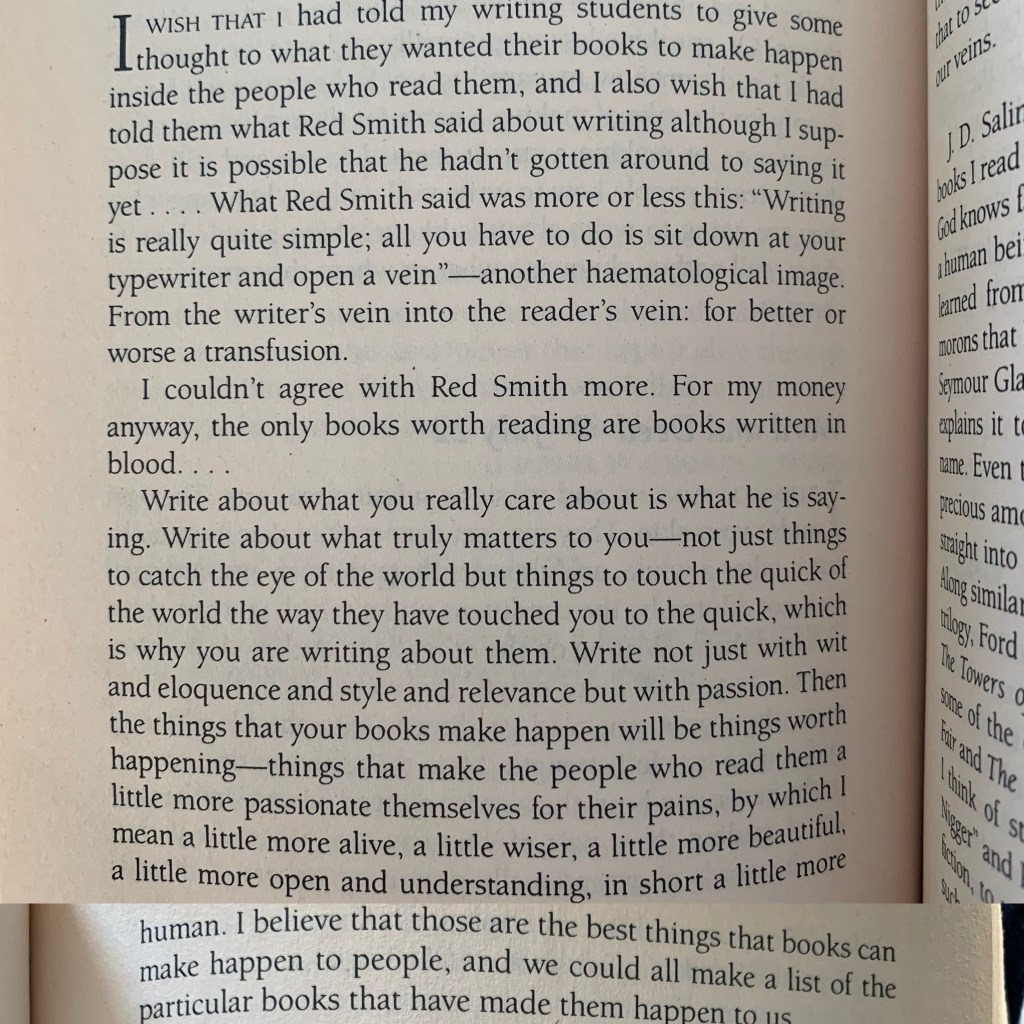
Books That Make Us More Human

Above is an excerpt from Fredrick Buchner’s daily meditation book, Listen To Your Life.

Here’s a list of books I’ve read recently that have made me “more human.”

  • How to be an Antiracist by Ibram X. Kendi
    • Powerful look at how racism lives inside our society and inside each of us
  • The World’s Fastest Man: The Extraordinary Life of Cyclist Major Taylor by Michael Kranish
    • Interesting look at the life of the first Black sports hero. There is a cycling velodrome 2 miles from my home named after him.
  • The New Jim Crow by Michelle Alexander
    • I see how our system of criminal justice and many other policies hold back people’s humanness.
  • Keep Going by Austin Kleon
  • How to Listen to Jazz by Ted Gioia
    • I’ve always enjoyed jazz music…most days it’s playing as I work. This book showed me the depth of the origins of the music and the intricacies inside each song. It’s more than background music and the musicians are becoming my friends in a way.
  • The a Coaching Habit by Michael Bungay Stainer (I didn’t read it recently but refer to it often)

What books would you add to this list? I’d love to hear!

Build Confidence in Change

When change comes, do you embrace it and adapt or resist and fight?

Often we resist change because a lack of confidence.

Two ways to build confidence as you embrace and adapt in change:

1. Look back and remember times you’ve had success. Think of the generalized skills that allowed you success. Summon those skills you have.

2. Break the change into smaller goals. More visible and attainable steps. As you check things off you’ll spur momentum and assurance.

Even though…

We want to know the next right step. The box to check off. The category to put someone.

All so they can fit our process…really so they can fit into our current world view or perspective.

This is the case with people interactions on many levels. When coaching someone. When leading someone. When trying to sell to someone. When debating with someone.

And yet we are only pushing people more and more apart.

We think “if only they would see it as I do…”or “if only they would appreciate this concept…”or “if only they would prioritize the right thing…”

Instead of saying “if only…” we should take the approach of “even though…”

There is a way through it just may not look like you expect. The person may not fit your typical coaching framework. They may not need what other people you’ve led have needed. They may not value the same things you do.

We need to go where they are and see it as “even though…”

Even though they see it differently we find a way to serve. Even though they value something else we can help get a good outcome.

It becomes less about us and more about purely serving the other. The route may not be clear but that’s the fun in it! There will be a surprise around the corner and that challenge alone can spur us onward.

What stories are you telling yourself that benefit from an “even though” mindset shift?

Offer a New Map Instead of a Compass

Often we don’t have leverage to change someone’s mind.

If someone doesn’t know how to use a compass, they likely won’t pick one up.

But if they already are holding a compass, we can show them a new map. Maybe an updated version or a different territory.

Sometimes someone may not have a compass but we can point out the mountains in the difference. They may not have a compass to get there but we can meet them where they are and help towards some change.

When someone is ready to learn to use a compass, we’d better not bombard them with the map but teach them to use the compass first. Being ready to also meet them where they are.

We need to know our audience and build what we offer based on that or be brave enough to say, “This isn’t for them.”

What is the compass needed to navigate?

What is the new map you could offer?

Who is your audience?


Seth Godin discusses this idea at the end of this podcast in the question section.