Scan to Notice Emotions

My default is to suppress and minimize my own emotions. They may get in the way of my reasoning. I don’t want to seem unreasonable.

But in reality skirting our emotions can be the thing that makes us unreasonable. Our emotions are there for a reason. They are there as attention magnets, to help us notice things. To point out where we might need to focus.

We do need to ensure to manage our emotions but we cannot get used to suppressing them.

Emotion assists with reasoning.

At times we may find it easy to notice and actualize our emotions. Put words or images to our emotions and know what to do with them.

Other times we may miss them entirely. If you sense there is emotion present but you cannot recall it to the front of your head, try to simply scan your body.

Scan your body inside and out. Take note what is there. Wonder what the emotion behind that noticing is.

Allow emotion to assist in your reasoning process.

This idea is new to me. I learned it from Ed Batista’s Post on Antonio Damasio on Emotion and Reason.

Enrollment vs. Attention

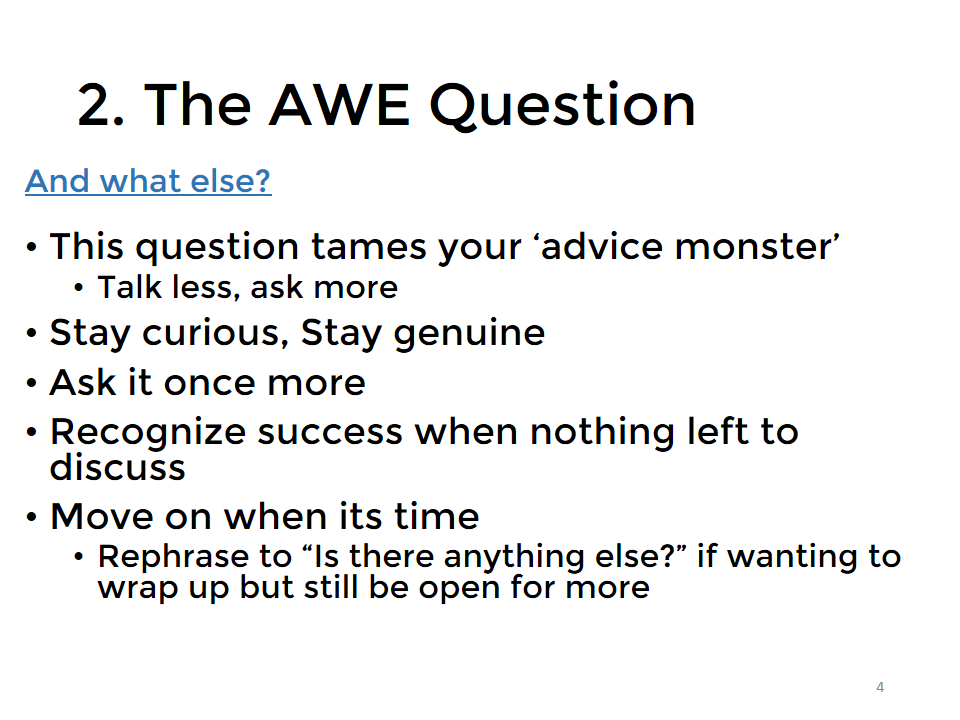
Our typical meeting model or conversation model is all surrounding attention.

Now that everyone is in the same room, let me talk at you. Now that you’re done talking, let me tel you a story.

I’ve been forced to refine how I connect with people with increased digital connection. We cannot guarantee we have anyone attention (well we never have been able to but even more evident now).

This requires attaining enrollment.

The other person or people choosing to listen and engage. This type of engagement gains much more success and effectiveness than simply having someone’s attention.

Now that I have you together, I’m going to compel you to hear me out. Now that you’re done sharing, I will ask a question to dive deeper. Now that we are connected, I’m going to add something that you add valuable.

The focus of the interaction is less about us getting our way and more about us creating a space for the other to engage in a way that honors them. It’s service oriented. It’s other focused. It’s empathetic.

Take the chance in front of you to not just someone’s attention but enroll them.

Seek enrollment and gain awareness when you’re only seeking attention.

Enhance to Improve

The things I enjoy most are the ones I feel confident in. Not necessarily confident that I will do it well but confident that it is true, good, and at times that I will do well.

This confidence comes from preparation, certainty of expectations, practice.

Today I taught a scientific technical course which I have no hands on experience in yet is a very hands on concept. Even though I have no physical experience, I have thorough notes on the training. I’ve watched someone else give the training twice and taken notes of what they said, when, and to what context.

This enhancement led to confidence. Confidence led to improvement.

Enhancement for this was me taking notes on the training. Improving my preparation.

What else can I enhance to lead to higher confidence leading to more satisfaction and enjoyment. Even though I don’t particularly like something, doesn’t mean I can’t have confidence in it.

Maybe sometimes confidence can turn our “need” mindset into a “want” mindset.

Tell Not Just What’s Working but Why

Giving feedback is a key piece of coaching someone or simply doing life with someone. We may avoid giving feedback because it can be difficult to articulate or we are concerned of the relationship.

If you find yourself mustering the courage to give direct feedback, positive or critical, be sure you explain why that thing worked or it didn’t work.

We increase our feedback game when we can explain to the person why something worked or didn’t work. This might take extra research or knowledge gained over time.

If someone gives a presentation and they delivered well. Our easy response is, “You did a great job! Keep it up!” This does little for that person. It may encourage them but ultimately understanding why it went well builds truer confidence.

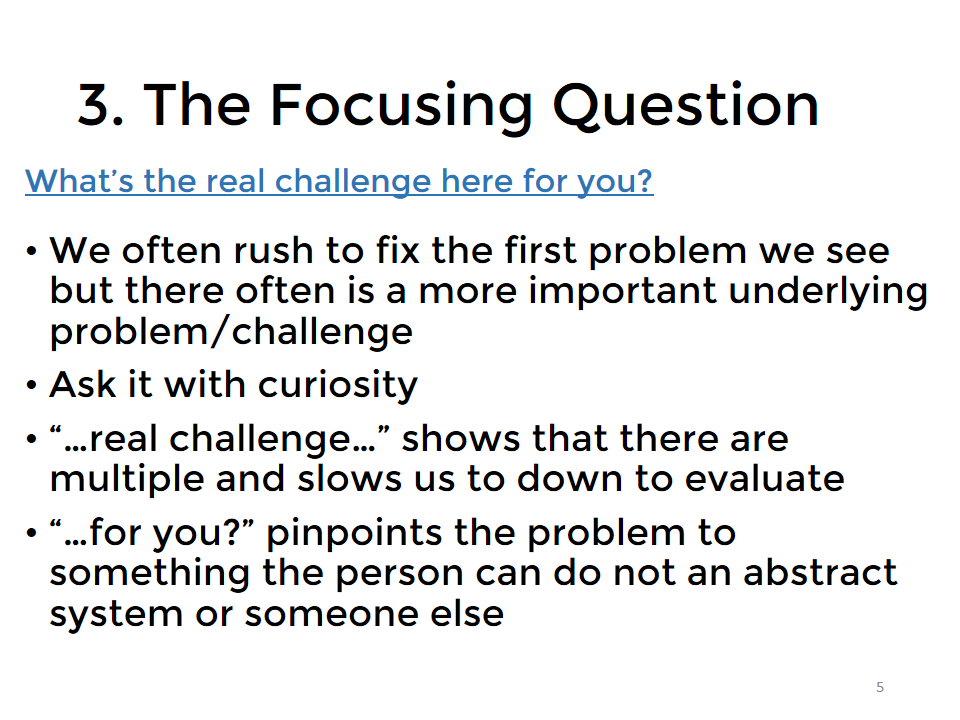
Be specific about what is working and why it’s working. If you’re receiving feedback from someone, ask them more about it. Maybe ask, “What did you enjoy most about this?” or “Why do you think people appreciated the presentation?”

The “what” is helpful but even more helpful in feedback is the “why.” Maybe we can give someone the “why.” Maybe we can ask for the “why” when receiving feedback. Maybe we need to seek out the “why” after we receive that feedback.

I’m working to research and learn more so I can continue to provide people with better “why” in feedback.

I know I also have a blog talking about how “What” questions are more valuable than “Why” questions. “What” is often the starting point for a little more into “why.”

I first heard of this idea from Sally Perkins (a storyteller and storytelling coach) when she was on the Practice First Podcast. I recommend listening!

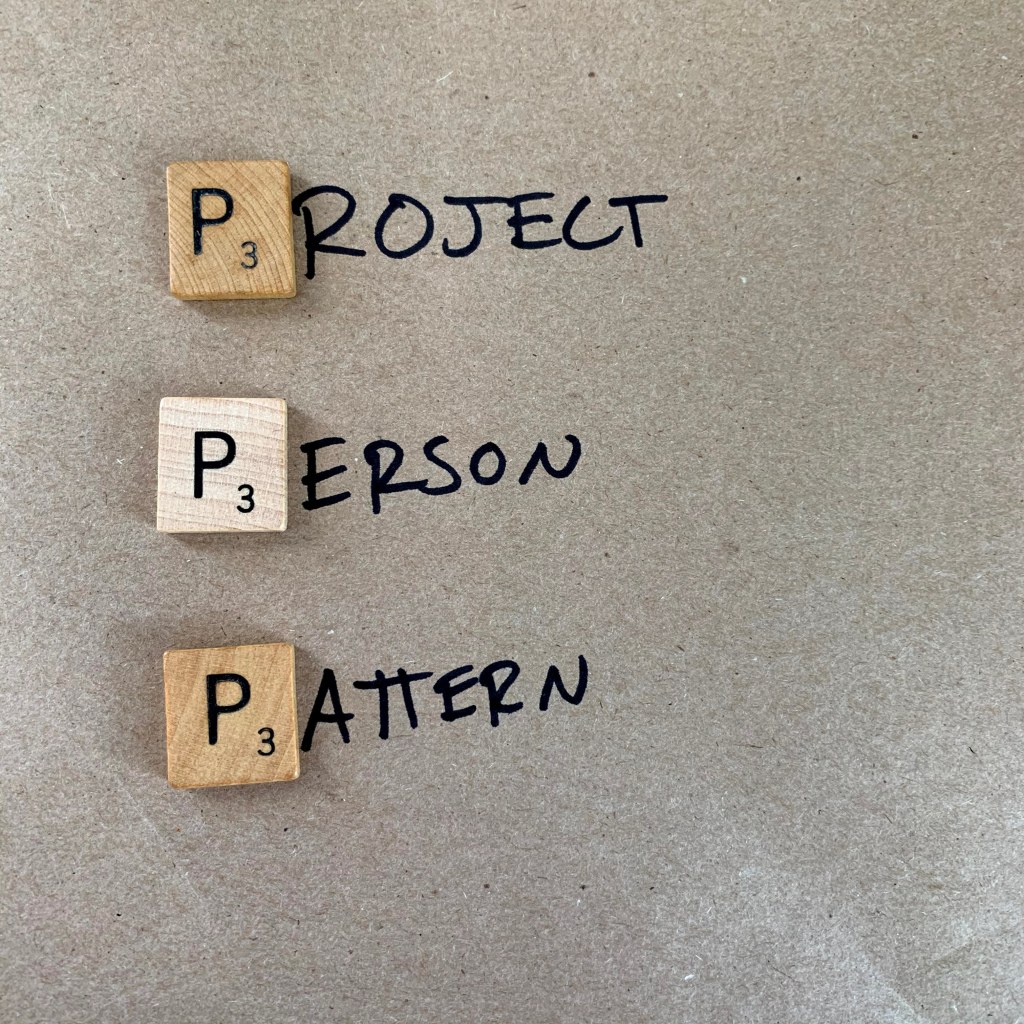
3P’s To Focus Conversations

As we coach others or simply help people solve problems, it’s easy to over complicate the situation or get distracted by too many options.

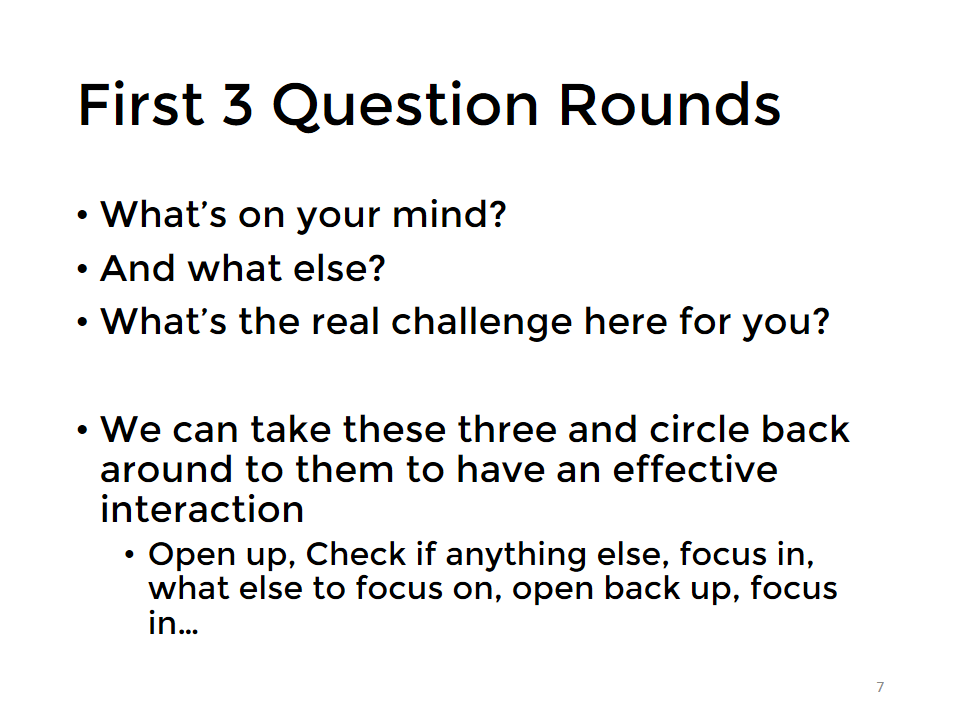
Use the 3P’s to focus your conversations and questions you ask.

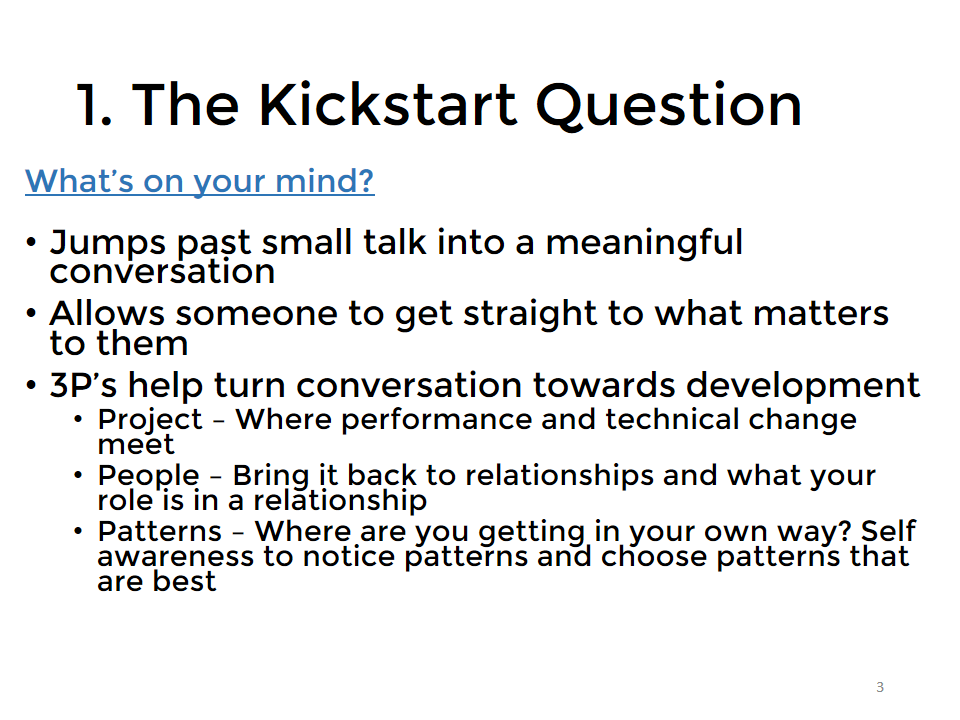
Consider how you can focus in on the Project the person is talking about or struggling with. This is where technical or strategic conversations happen.

Ask questions about the Person or people involved in the situation and help the other person see how to impact the relationship.

Challenge the person to modify their Patterns in life to get the outcome they desire.

Rather than just dance around the complaining or the struggle, get specific and use one of the 3P’s to help you get there.

Of course anything we do in coaching someone else, we should apply to ourselves. Find ways to use the 3P’s to help yourself solve problems and focus in on resolutions.

I first read about the 3P’s from Michael Bungay Stainer in his book The Coaching Habit. I’ve written more about The Coaching Habit on my blog HERE.

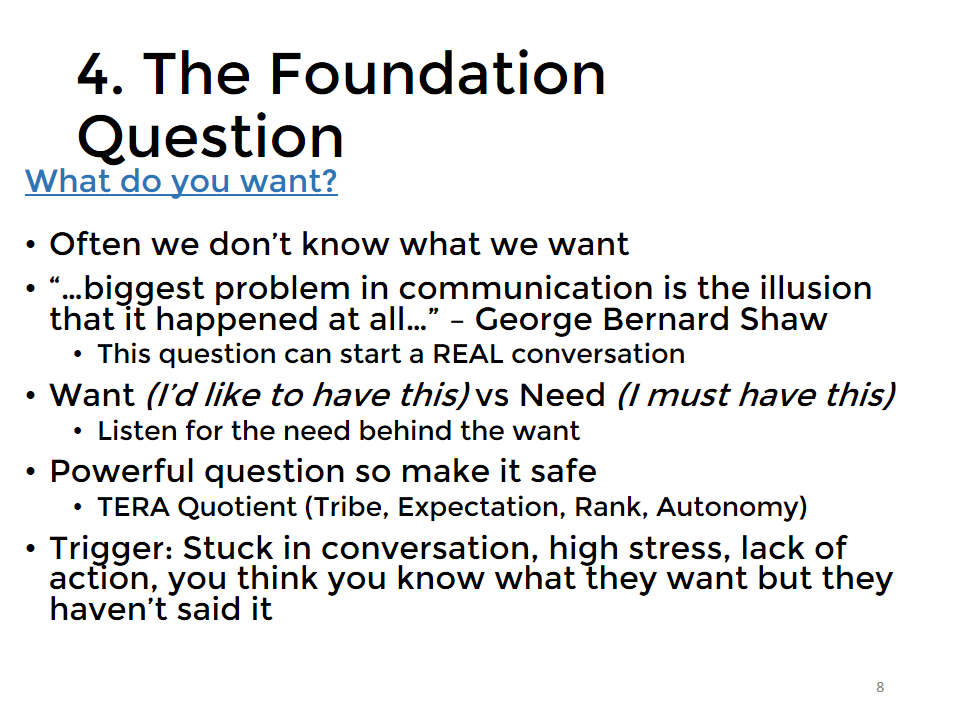
Want vs. Need Narratives

The stories we tell ourselves shape our perceptions and hence our attention and then our actions and then what we get. Narratives are powerful in our life and they are everywhere.

From what we put on when we get up, to how we talk to our co-worker, to what we career decisions we make. Narratives drive our world.

If we are attempting to overcome a challenge, we may have the following narratives:

“I just need them to get out of the way!”

“I need their help to get through this.”

The key word here is need.

Need is an extrinsic attribute. It relies on someone else. Because of this it automatically puts us in a victim mindset. We can’t do anything but explain our need and let them do what they want.

An alternative is “want.”

“I want their help on this.”

This is an intrinsic motivator. The story is flipped from being about the other person needing to do something to us having a desire for something.

By simply turning this story around a little, we gain even more power in it. We see ourselves as a key part of solving the problem.

The challenge then becomes a motivator rather than a burden.

What challenges are you facing?

Where can you move from a “need” narrative to a “want” narrative?

Simple Mindfulness Practice

Meditation or other mindfulness practices seem daunting. How can you quiet your entire mind!? I don’t have time to sit in silence!?

Each morning I make space for 5 minutes of meditation and it is a habit I cherish each day as a workout to increase my mindfulness.

Mindfulness helps us create an internal environment suitable for high effective work and living. Helps us regulate our emotions, build resiliency, increase our ability to focus, make us more aware of subtleties around us…

Meditation is a workout. It might even feel stressful at times. That’s the point!

While meditating we should improve our awareness and focus. We focus on a specific object (breathing, phrase…), notice when we lose focus, release that loss of focus, and gravitate back to original object of focus. It’s a workout!

Here’s a simple start to building your own mindfulness practice:

Set a timer for 5 minutes (or more)

Get comfortable sitting. Close your eyes or keep them slightly open.

Bring your attention to your breath. If helpful count each in and our breath and focus on the breathing or counting.

As you gain focus on breathing, lift your focus to what you’re thinking about. Think of it like watching cars move through a four way stop. Acknowledge those thoughts and consider how you feel about them. Notice those feeling and thoughts as if they are moving through the intersection and outside of yourself.

When you want to release a thought, simply imagine yourself blowing a bubble and release the thought and emotions as if they were a bubble floating away. If they come back, let them sit and then release them again.

Bring your attention back to your breath as needed and as your focus gets too busy.

Repeat the cycle.

The goal is to have a mental workout. Help your mind grow in its ability to be simultaneously aware and focuses.

I learned of this tactic from The Mind of The Leader Book and the app included. Ed Batista has a couple great posts on mindfulness. I recommend this one with a thorough breakdown on getting started.

Make the Most of Your Attention

Where you attention goes, energy flows.

This is true with mountain biking. As you approach an obstacle, if you focus on the obstacle, you’ll surely hit it head on. If you instead look past it at where you hope to, you’ll find the best route around it, through it, or over it.

Our attention drives the results we get because it drives what we focus. We must set up ourselves to have attention on the best things:

  1. Set our environment/rhythm/structure to direct our attention well. Austin Kleon talks about finding a Bliss Station.

2. Set ourselves up to regulate our emotions (Not control or minimize but regulate). For me, this is mindfulness exercises, keeping a journal, getting proper sleep, eating and drinking well, and making room for regular exercise. Ed Batista says our emotions are attention magnets. Our feelings will draw our attention quickly and readily. They are designed to do this. We shouldn’t try to control this but instead consider how to regulate and build in space and time to process and consider these emotions.

3. Build narratives which honor where we are going. The stories we tell ourselves guide our attention and build out the life we will lead. Ensuring we question the narratives we hear and state keeps this in check. We need an overall narrative that can overpower those minor, negative stories as they arise. This is where a Life Theme comes in. When we claim who we are and where we are going, we squash those other narratives. Of course we claim it as if it’ll be true forever but know that it will change and build in re-evaluation.

4. The comparison of others will steal away our attention. We can’t turn this off but we must keep it in check. There are platforms engineered to draw us into social comparisons. Keep it in check.

A lot of this requires slowness to be built into our lives. We can’t add it all at once. Start with mindfulness practices. Then take on a journal practice. Then build out a Life Theme. Then design a work setting or daily routine that sets you up well. Then quit those social comparison habits not serving you well.

In the end, know that attention is what will help you be who you want to be and it also could pull you away from who you want to be.

These points were based on Ed Batista’s article “A Better Information Diet.”

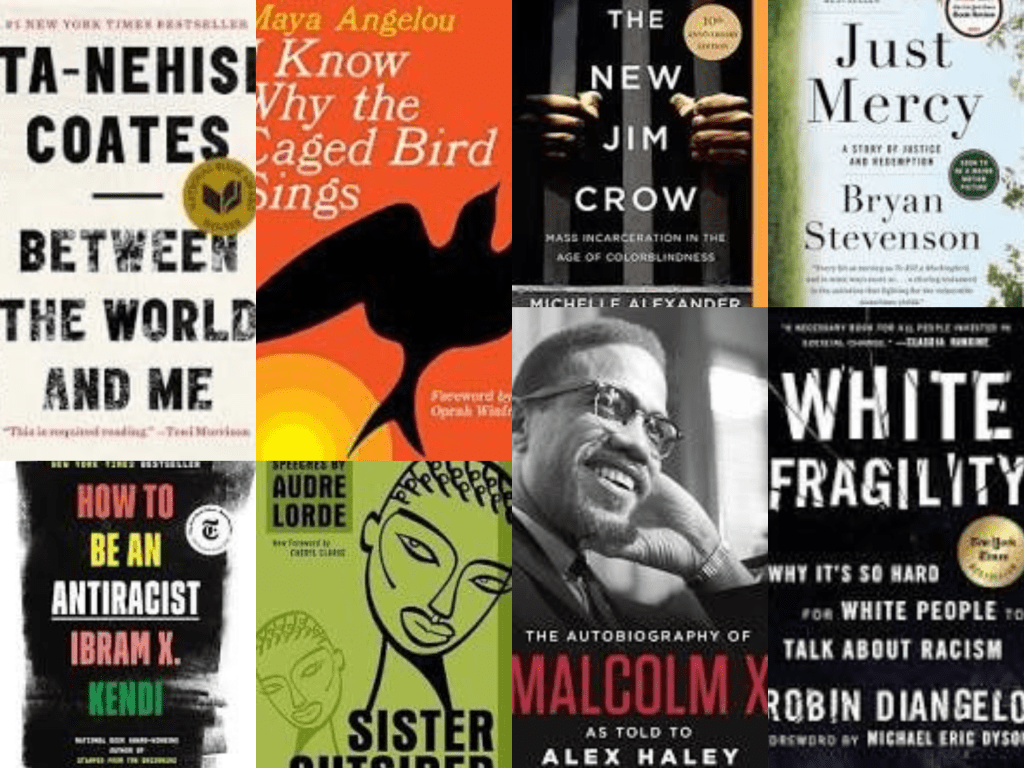
8 Books – Understanding Racial Injustice

Reading captivating and informative news or posts online have huge value. They ensure we keep ourselves connected to the pulse of change and the momentum of society’s movement towards racial equality. Here in the United States, there is new information being posted hourly on how to be involved in our country’s wide awakening to racial injustice. Reading books has allowed a space for me to process the news and posts I consume while gravitating towards deep personal change and plan civically.

Here, I recommend 8 books which have helped me in my journey towards understanding racial injustice and working towards racial equality. I must recognize my recommendations come from my white American male perspective. I intend to center on Black, Indigenous, People of Color (BIPOC) voices in this time of pushing toward justice and equality. To that end, much of my post below is shaped by Ibram X. Kendi’s article in the Atlantic and recommendations from my local social justice movements.

This recommendation should not be used as a checklist but an inspiration to begin or continue to fight racial injustice everywhere. This list is not complete, and not universal to all, but I hope in hearing my journey you are encouraged in your own. Links to each book below are to a non-profit book provider supporting local book stores but I recommend you find a local bookstore to support.

  • Just Mercy by Bryan Stevenson: As I work towards gaining understanding and awareness of racial injustice, it is important for me to start with stories of people’s experiences. Just Mercy: A Story of Justice and Redemption is written by the lawyer Bryan Stevenson who has spent his career serving those in most need. He focuses on the story of Walter McMillian, who was a young man sentenced to death for a crime he insisted he did not commit. Just Mercy showed me the challenges that Black people face in the criminal justice and policing system. I felt things I had never felt before and was moved by this powerful, real life, tragic story of how the justice system fails Black people in the U.S. The book was recently made into a motion picture starring Michael B. Jordan and Jamie Foxx. You can watch it for free right now for a limited time.
  • White Fragility by Robin DiAngelo: If you are a person who is white, looking to expand your knowledge in racial justice but limited on time to read, I recommend starting with this book. This book (written by a white author) sets the stage for what it means for white people (specifically white Americans) to step into allyship for racial justice. This book helped me realize the nuanced ways white supremacy, my own racism, and racial bias affect my actions. In addition to pointing out where other people and systems are propagating racial inequality, I begin to see even the smallest things I do which perpetuate racial injustice and inequality. After reading this book, I have language to explain my movement away from contributing to the toxic systems of White Supremacy. This book comes from an author who is white and is written to a white audience. It should be noted that Ibram X. Kendi recommends BIPOC individuals to read Locking Up Our Own by James Forman Jr in substitution for White Fragility.
  • How to Be an Antiracist by Ibram X. Kendi: Racism feels like such a dangerous, scary word. It is a hazardous system and it is highly ingrained into our society. This book helped me see racism for what it is and how racism functions in society and at times, through me. I would not have a good definition for racism or antiracism before reading this book. I understand from this book there is no neutral party in racial inequality. You cannot be between justice and injustice, equality and inequality. The author, Ibram X. Kendi, powerfully breaks down how racism shows up around us and how we can strive towards antiracism.
  • Between the World and Me by Ta-Nehisi Coates: Ta-Nehisi Coates generously shares with readers his advice to his son on how to go forward in life as a Black man in the United States. This memoir breathed life into my desire to be an ally and advocate for my Black friends, neighbors, and fellow humans. Coates does not sugar coat any piece of his experience and leaves a raw, historical, and wise outline of his experience being a Black man in the United States.

The following books are ones I have not yet read but are next on my reading list:

  • I know Why the Caged Bird Sings by Maya Angelou: My own reading reflects the voices of mostly white men, Black men and white women. I hope to learn the story of a Black woman from Maya Angelou’s iconic memoir. The memoirs of the past and present can lead our feelings and actions after realizing our own and society’s racism.
  • Sister Outsider by Audre Lorde: These essays of Audre Lorde are said to bridge connections from understanding racial inequity to gender and sexuality inequity. This book is next on my list, as it speaks from the intersection of race and sexuality, adding voices from the LGBTQ+ community.
  • The Autobiography of Malcolm X: Malcolm X was not discussed much in my formal education around race. I am reading this on recommendation of others and looking to understand Malcolm X’s transformation. From that I hope better to understand the Black Lives Matter movement and the history of social justice in the United States.
  • The New Jim Crow by Michelle Alexander: I’ve often heard and understood (from Just Mercy), the criminal justice system in the United States disproportionately incarcerates Black men. This book is said to reveal how deeply rooted and preserved systemic racism is in the United States. I hope to understand the systems at play and see my role in standing against this racial injustice.

If you would like to discuss anything you read in the list above, or have other recommendations, please do not hesitate to reach out. I am always looking to learn from and alongside others.

As we all stand for equality and oppose injustice and inequality we have a lot of work ahead, both civically and within ourselves. Ibram X. Kendi on Brene Brown’s Podcast, Unlocking Us, put words to how I’ve felt. “Once we realize we have been running away from recognizing our own racism, we cannot help but run towards antiracism and racial justice.”

HUGE shout out to a team of people who helped me revise, edit, and write this post. Grateful to have these people as friends: Amber Ellis, Phil Moreland, Anna Tragesser, Cody Tragesser (Twitter, IG), and Steven Durr.

I initially wrote this for a newsletter for the company I work for, Eurofins, as a piece of our Equality Driving Excellence Initiative.