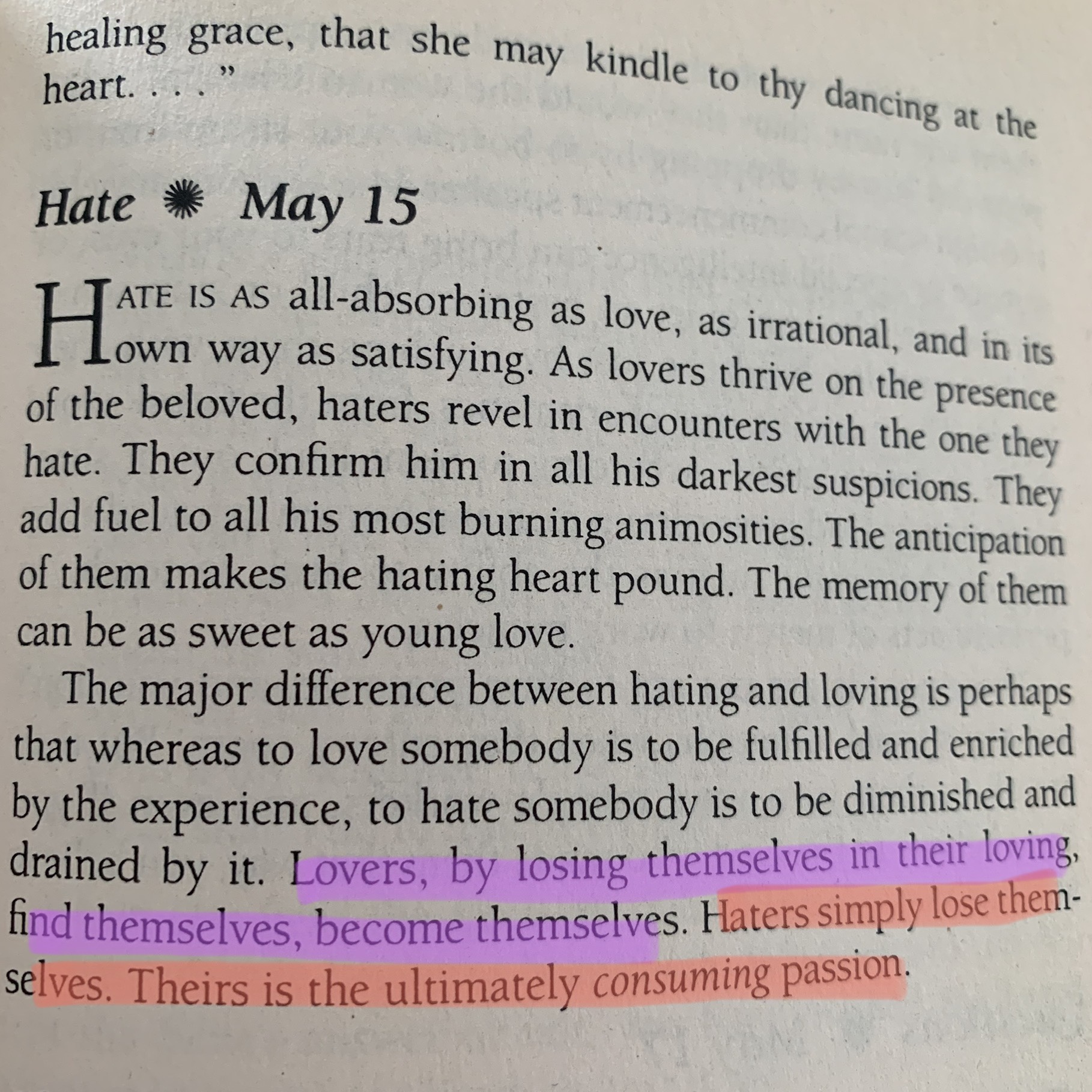
From Frederick Buechner in Listening to Your Life
Both love and hate involve losing yourself but the root of that loss drives our outcome.
From Frederick Buechner in Listening to Your Life
Both love and hate involve losing yourself but the root of that loss drives our outcome.
Saying no is important. Our days naturally fill up with things to do and so we must give boundaries to our yes’s with no’s.
If that isn’t enough, it’s often easiest for us to say no to those closest to us (our families suffer because of this) and those most distant from us (not a big deal)
Two ways to say no: (From Michael Bungay Stanier)
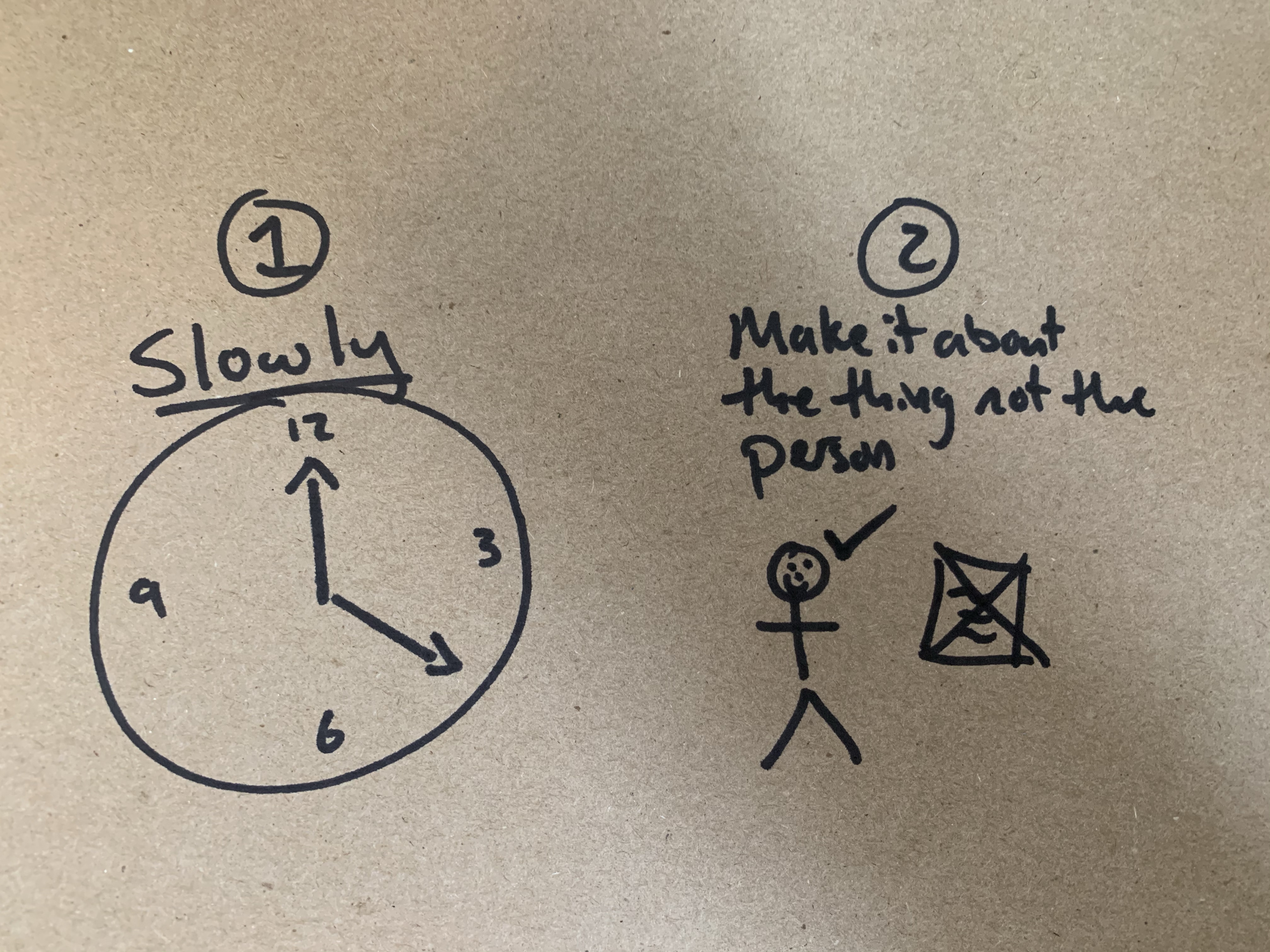
One: Say yes more slowly. Bring curiosity to your yes and ask more questions. Delay a response and spend time considering it.
Two: Say no to the thing, not the person. Write down what is being asked and point to that and make that thing the subject of the no. Remove the ask from the person and clear say no to the thing not the person.
Our no’s matter. When we say yes to something we are ultimately saying no to other things. Get good at saying no when you need to.
Sometimes we decide to go out on a nice bike ride and then all of a sudden we see a storm rolling in.

Naturally we are going to hurry up to try to beat the storm.
Maybe it’s not a bike ride for you. Maybe it’s not an actually thunderstorm.
It could be a new business venture, a new job, planning something new for your family. Regardless, storms happen when we “go on a bike ride.”
Occasionally we will make it home but often we get caught in the storm. When we do, we can’t change the storm or make it go away. Complaining or feeling sorry for ourselves has no impact on how dry we stay in the storm.
All we can do is protect what’s important and trudge through. Maybe you even find something to enjoy in the storm. Maybe you realize being in the storm isn’t so bad and you find joy along the way.
Serendipity: the faculty or phenomenon of finding valuable or agreeable things not sought for.
If we want our best ideas, projects, interactions to come to, we must hang out in the right spots.
Maybe that’s physically but right now for most that’s not possible due to COVID. More importantly we need to set up our environment for opportunity.
Creating rhythms and routines with “open doors.”
Maybe this is a meditation or mindfulness practice each morning or a habit to read before bed or a weekly walk at a park or a newsletter from a trusted source…
Structuring our space so it allows for hanging out with our thoughts, projects, resources.
Maybe this is an actual cabinet of curiosity or a stack of your favorite books next to a comfortable chair or a desk dedicated to drawing or writing…
It’s a lie that good ideas, meaningful work, powerful relationships find us. We also don’t have to always actively seek them out but we must set ourselves up to be encountered by them.

Empathy isn’t something you either have you don’t. It’s a learned way of thinking and acting that is driven out of our habits.
If you hope to be more empathetic, add a habit or practice in your day that puts you in someone else’s world or sets you up to serve them.
Each morning I prepare coffee, breakfast, and pack lunches for my wife and I. If I did it just for me, I don’t think I’d be as thoughtful towards others throughout my day.
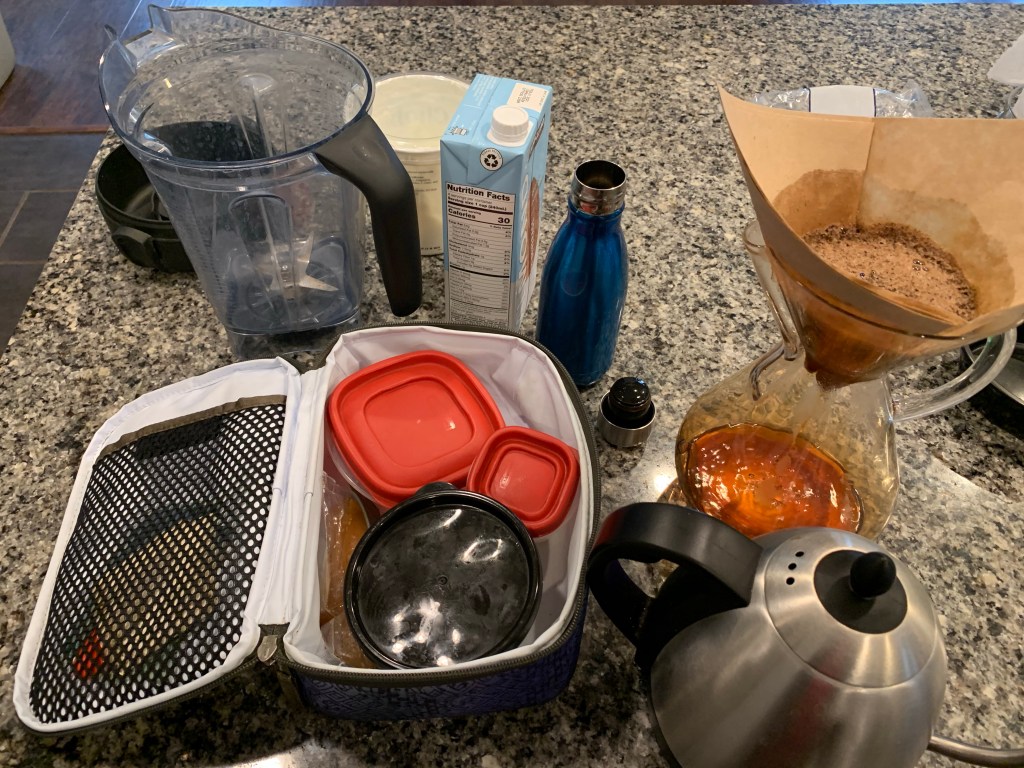
How can you add a routine of other orientation, leading you into more empathy.
We can’t become more empathetic by thinking it into existence. We must change our actions.
First in this idea is to know and claim what you do. Who are you? What are you best at? What passions guide you?

Maybe “what you do” isn’t what your job is. Maybe it’s what your aspiring to do. Ramping up. Building into. Growing towards.
Once you have clarity of “what you do,” get good at it. Get better at it. Continue to hone.
Don’t get stuck in a single direction but as you refine, stay curious. Drive that curiosity into refinement.
We can’t expect people to follow us or to make the difference we dream of if we don’t get good at what we do.
For me, curiosity is a consistent catalyst in continual cultivation.

If we want to be primed to ask the best questions, we must first be grounded.
To be grounded, we need to remember what we truly have influence over and what we don’t.
Especially when asking questions, if we worry about what we can’t control (circle of concern) we give up our power and make less impact. We need something from the person we are asking the question.
If we instead focus on what we can control (circle of influence) we will be ready to listen and offer a generous question. With readiness to hear.
We can’t use questions to get our way but rather be independent ourselves and ask questions to allow the other their independence and urge all of us towards deeper understanding.
When we want to ask the best questions, we must first be willing to listen.
Questions aren’t a way for us to convince someone but a way for discovery to occur.
We must be grounded and trust the question for it to be a good question.
Questions help other people come to conclusion, go through a process of understanding and critical thinking.
Questions are there for us to understand the other and ourselves and the work around us. A question is a way for us to grow in our own understanding.
Be curious.
Inspired by Michael Bungay Stanier’s the Coaching Habit as I turn the book concepts into a training.
Entering this weekend ready for a break from the routine and seeking to sit in the weight of this thought.
The rain today is perfect timing. Reminder to sit in the sorrow of where we are. Don’t flee from it and also don’t get stuck there but let it hit.
Found this through Austin Kleon’s weekly newsletter. Check him out.

Image Credit: Ryan Thacker at Might Could Design

How we describe what we do matters to the people who hear but more so to us. The person describing.
Austin Kleon in his book Show Your Work says to keep it short. Don’t pontificate. Don’t use words that aren’t factually true. Be honest and clear.
Who we are and what we do don’t always match up but answering this question with succinct clarity might move you to do more of who you are.
Mine right now:
I do coaching and training within a large scientific company. On the side I am looking for more ways to coach and am designing a coaching framework to guide mine and others coaching.
 phil invites