Lazy is not Sloth

Excerpt from Fredrick Buechner’s Listening to Your Life

Buechner is describing sloth as what I understand as incessant flow.

When we are focused but not aware. This is valuable in some instances (doing the dishes, tedious but necessary work…) but if it becomes a norm, it can derail and lower meaning in life.

The alternative is mindful. Focuses and aware. A mindful person can be seen as lazy sometimes because they take a walk after a complicated phone call. They spend extra time meditating each morning. They don’t rush out of a conversation.
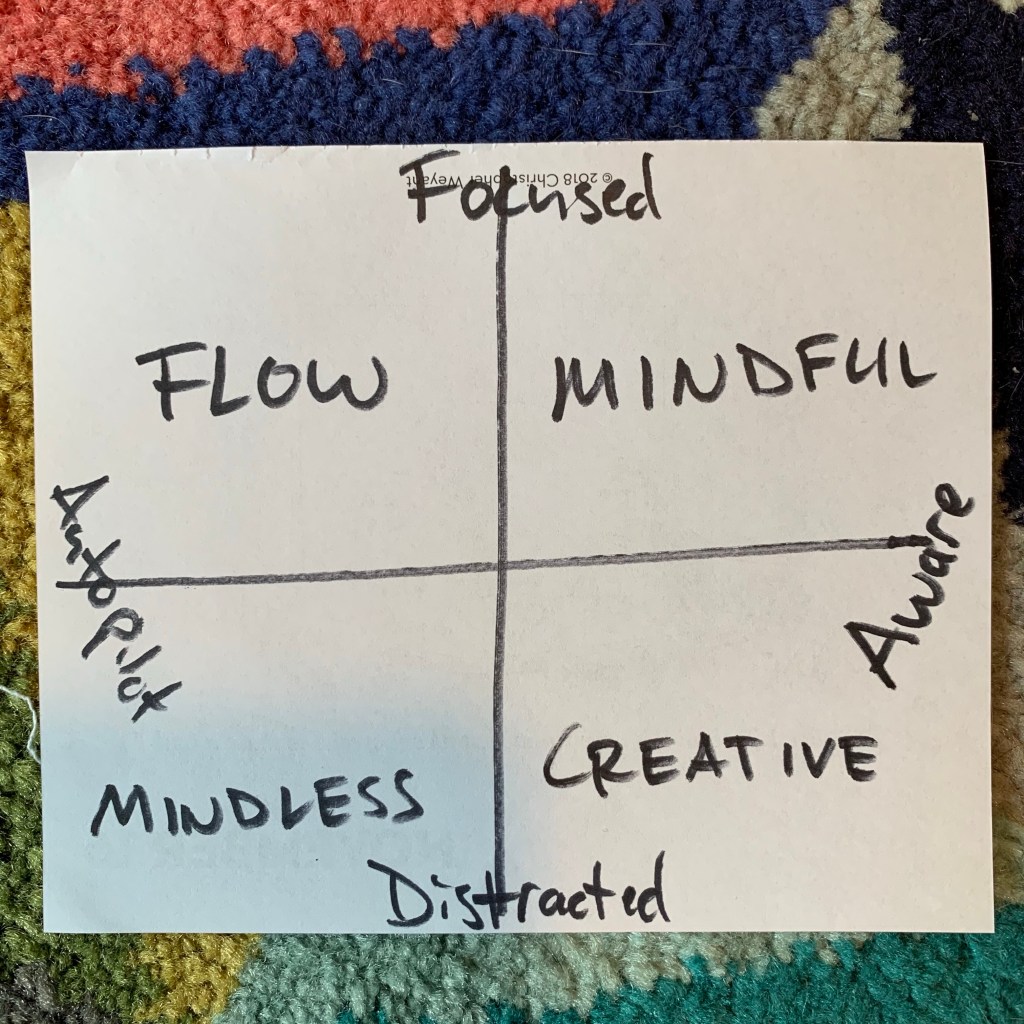

Idea from Mind of the Leader book

Mindfulness practices has helped me tremendously to not have sloth but occasionally look lazy while bringing my best to those around me.

Strengths Over Weaknesses

Focusing on our weaknesses or liabilities is like tightening a ratchet. It is effective to a point. At some point we get so tight, we break or we can’t go any tighter.

Focusing on our strengths is like using a machete to create a new trail. It is endlessly fulfilling and possible. We can continue to go down the path we are on and start creating a new path on a whim. We have momentum and power here.

We have to use both to grow. Sometimes its about a little ratchet tighter and hopefully more often it’s about the endless possibility of cutting out a new path.

Coaching is Like Scaffolding

When we are operating just beyond our comfort zone or current skill level, we benefit from having scaffolding around us.

This is a place for a coach. Someone who can help you consider the next step, provide a push back on track as we get off, help us feel more certain.

Where could a scaffolding coach help you?

Where can you be a scaffolding coach for someone else?

Isolated : Insulated

Just because we are not isolated does not mean we are not insulated.

Change, progress, movement, improvement, growth happens when we ensure we are not isolated as well as not insulated.

Exposure. Reflection. Conceptualization. Application. Repeat. This is the route to growth. Any isolation or insulation will only slow/limit this growth.


David Kolb’s learning styles as well as Tara Fenwick’s practice-based-learning talks more deeply about this concept. Ed Batista summarizes and adds to Kolb’s Learning Cycle.

Coaching Round Table: What I Need to Grow

I see a new blog post that intrigues me.
I read a book where I’m feverishly underlining.
I listen to a podcast and I find myself continually going back 15 seconds to write down what someone said.

All this is not enough for me.

In order to truly grow, we must deeply consider and apply ideas and concepts.

This is best done among others.
Hearing and seeing what others are learning.
Getting energized by the way someone else is applying a jointly learned concept.
Being challenged to stretch thinking and imagine beyond your status quo.

Starting mid November 2020, I’ll be hosting a Coaching Round Table.
A space to share what you’re learning, hear what others are learning, and go together to be better.

We will focus on topics around coaching and leadership. However we will break down the walls of considering how this applies to a day job.

“Who we are is how we lead.”

Brene Brown on the Dare to Lead Podcast

If you’re interested to join, complete the form or email me.

We will all be better if you are there. Hope to see you around the table!

Grow Empathy: Listen Beyond the Sound You Make

Go take a walk
It is easy to hear your own footsteps,
the rustling of the leaves you kick,
the crack of a branch you break.
Listen also to all that is beyond yourself.
The breeze shaking the leaves,
a creak of an old tree,
the quip-quip-quip of an unfamiliar bird.
Be led beyond yourself.
Sense and feel that which is other,
consider from where it comes,
acknowledge, honor, and respect it.