Working in Solitude

Since August 2019, I’ve been working remotely from my home office. At first I was scared! I would have described myself as an ultimate extrovert. Some of the best memories are in groups or with other people…seldom have I fondly looked at memories of solitude.

Until now…

I HAVE LOVED WORKING IN SOLITUDE!

It’s been 11 months of my day job being mostly alone and I feel confident, comfortable, and fulfilled. This didn’t happen immediately as I often used my local library or favorite coffee shop as a coping mechanism when I felt alone at the start.

Then COVID-19 hit and everyone was working from home and those coping mechanisms were taken away.

I galvanized, doubled down, dug into working in solitude. I built a sorts of bliss station in my office and developed a routine and rhythm for my day.

It also helped knowing the rest of the world was experiencing something similar. I saw many others pontificate their work from home status and how they missed their office mates. I didn’t relate to that much. And that surprised me. I thought I was the ultimate extrovert.

I still am an extrovert but the others I get my energy from are virtual, in books, and in my own head. I also have times where I see friends and family, which energizes me even to the tips of my toes.

Even though I love my rhythm and routine of working in physical solitude and often total solitude for several hours a day, I am realizing I cannot stay so insular. Maybe occasionally have another body in the room…other than my pups who do a great job at reminding me to take a second to bark at notice something outside the window, throw a ball down the hallway, snuggle for a hot second, or take a breath of fresh air.
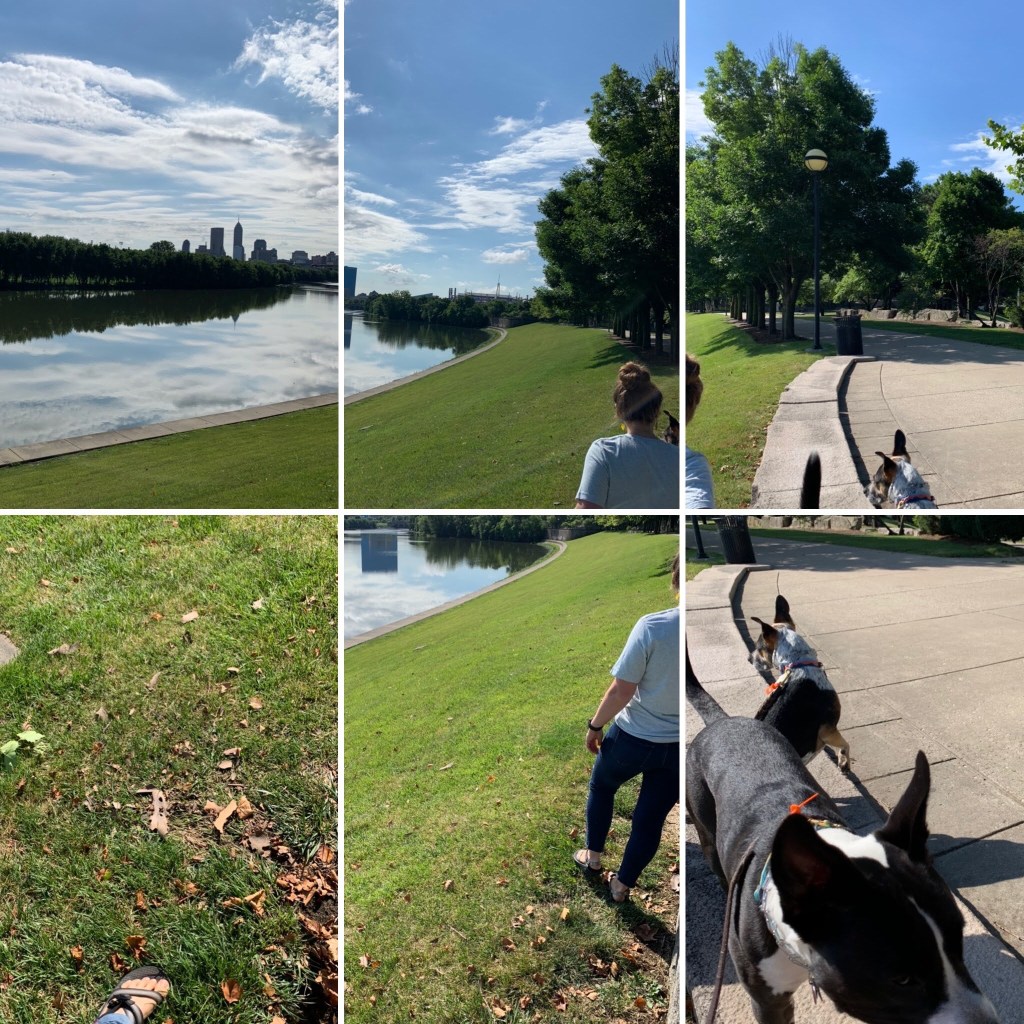
Having a human body in the room doesn’t mean we are working on the same thing but parallel working. Maybe its a friend to sit with and just chat occasionally or bounce an idea off or see them in the zone spurring me to stay in the zone or see them take a break encouraging me to take a break.

The point here is to find a rhythm but know life is all about transitions. Jive in the beat but be on the lookout for a new melody.


This idea was spurred on by Austin Kleon’s Post about solitude and a link in that post to the idea of having another body in the room
Learning and Accountability

As we undergo change, learn something new, grow, we need to keep accountable to make the change or apply it to our daily lives.

Sometimes we can learn and keep ourselves accountable.

Most often I find I best apply my learning and growth when it’s done with others. They help me learn deeper as well as stay motivated to put the learning into reality.

Find a cohort. Find a colleague. Find a partner to go with.

You’ll probably make the most of your investment of learning or change if you have people along for the ride with you.

Offer a New Map Instead of a Compass

Often we don’t have leverage to change someone’s mind.

If someone doesn’t know how to use a compass, they likely won’t pick one up.

But if they already are holding a compass, we can show them a new map. Maybe an updated version or a different territory.

Sometimes someone may not have a compass but we can point out the mountains in the difference. They may not have a compass to get there but we can meet them where they are and help towards some change.

When someone is ready to learn to use a compass, we’d better not bombard them with the map but teach them to use the compass first. Being ready to also meet them where they are.

We need to know our audience and build what we offer based on that or be brave enough to say, “This isn’t for them.”

What is the compass needed to navigate?

What is the new map you could offer?

Who is your audience?


Seth Godin discusses this idea at the end of this podcast in the question section.

Motivated by the Surprise

When we face a truly unique or difficult challenge, we are unsure of the outcome.

Some challenges, we can be certain how they will end and in those situations are they really challenges?

I’m looking for more challenges in which, I’m uncertain of the ending. I’m uncertain of the solution. I don’t know the right answer.

This propels a new motivation inside of me. One of anticipating and seeking out the surprise.

As I work towards solving a problem with very unknown outcome or path, the surprise is exciting and engaging. At the end of a working session, I will see something anew. See the world a different way. Realize a truth about myself I did not know. Distill a solution which feels original to me.

To me, these are the challenges worth investing in. Not to overcome fully but to seek the surprise and grow from it.

I heard of this idea on a podcast featuring Austin Kleon where he describes his favorite part of the creative process being the surprise during that creativity.

Redefining Narratives

We tell ourselves stories all the time. These narratives can be subconscious or we might be aware through mindfulness, journaling, reflection, outside perspective.

Once we realize we are telling ourselves a narrative that is not constructive to where we seek to go, we must replace it with a more ideal narrative.

I’ve found the practice of journaling to help with this.

I write out the current narrative I’m noticing.
Cross it out.
Write a more ideal narrative to replace it.

This ideal narrative doesn’t need to perfect or full proof. It simply needs to one little step better.

An example:

I need to do more to get to where I want to be.
Who I am is enough and I am putting in the work to get to where I want to be.

Our Illustrative Future

What attribute should I develop?

What skill gap should I train?

What box am I not checking off?

Which competency am I low on?

What habit can I form to grow?

All these above questions are not nearly illustrative for the future of work and the future of self development.

It won’t matter that you can check off the boxes or show well rounded nature.

Habits are the development plan of yesterday. (Not that they can’t be a start but they definitely are not enough on their own)

What is the development plan of tomorrow?

It is bound to carry with it vagueness.

The boxes are being blown up. We don’t need more checklists, we need innovation. We need resilience. We need ownership.

I am not searching for the habits to build nor teach but what am I searching for? I’m not sure yet.

3 Needs in a New Venture

As we transition our career or move into a new role or start a new business I find a few necessities as we round these corners in life.

ONE: RELATIONSHIPS
We need to have sustainable self-fulfilling people and community around us.
This is not necessarily about your business but it is especially about you. Co-workers, family, friends, peers, mentors.
Support and bedrock.

TWO: A PRODUCT
Must be robust and of quality. It needs to fill a need in the a world around you.
Ultimately it should be something that connects to the best of you.
Needs to be clear yet must be designed with nimble flexibility. Ready to mold as you change, the world changes, the product changes.

THREE: AN ECONOMIC OPPORTUNITY
A viable audience or a group who value the product and generate financing for it. Maybe they buy the product or service or maybe they lead to an economic opportunity. Stretch your expectations and thoughts here.
You should be specific as well as continually asking (and not necessarily changing but simply asking) “Who’s not here?”


It’s best to begin the new venture if you have at least TWO of the THREE.

Personally I’d want to be sure RELATIONSHIPS is ONE of my TWO. They are needed for sustainability.

A good PRODUCT will beget AN ECONOMIC OPPORTUNITY.
A bedrock of effective RELATIONSHIPS yield a market.
AN ECONOMIC OPPORTUNITY can lead to a quality PRODUCT.

TWO of THREE will ensure the THIRD will come.

Because RELATIONSHIPS take intentionality, sacrifice, and love to gain, you ought to have those before you begin or be willing to slow down and sacrifice to build them as you go. Or else you may burnout and blow up.

We don’t know what we don’t know

What are you doing to figure out what you don’t know?

Are you insulated in a bubble that only tells you things you do know?

You can be even more fully yourself if you open yourself up to find out what you don’t know and grow from it.

I’m seeing that my friends matter in this. They must be people who challenge me and help me see the world anew.

My family can be this but yet often these relationship are insulating…they should be and they should be restful places. At times I get a good does of reminder of what I don’t know here.

Professional settings should be diverse enough and open enough that we are regularly challenged with our perception. Often though we don’t do this to ensure we don’t rock the boat. Maybe you’re keeping people from pointing what you don’t know here protecting yourself and being closed for input.

Coaching for me is a place where I’m reminded of what I don’t know. A third party who is an advocate for me but also an advocate for the better part of me. The part I don’t see or the insight I’m not aware of.

Find places to know what you don’t know.

How I Journal (right now)

Keeping a journal and the active practice of journaling has been a critical piece of my own growth and mindfulness.

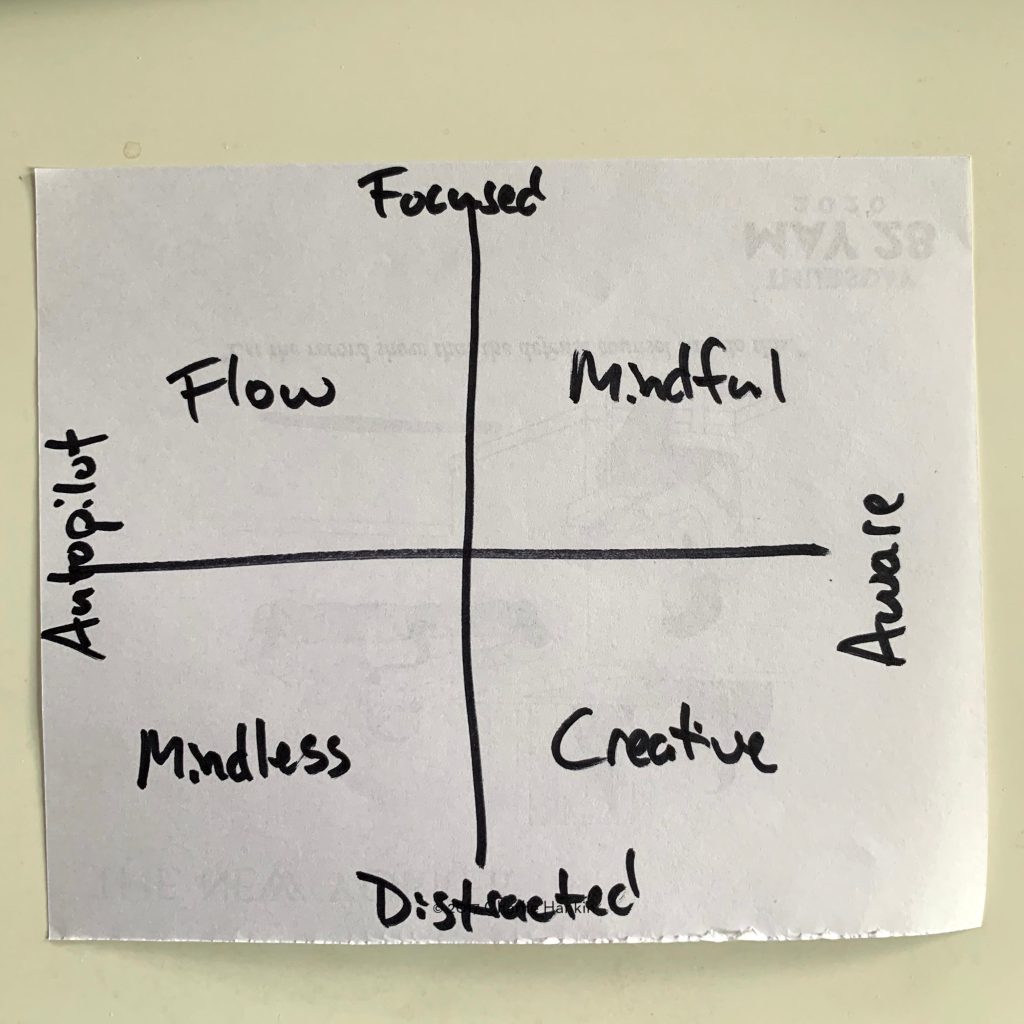
I increase my own ability to reflect and be aware of what was and what is and what is to come. By looking back or looking ahead, I grow in awareness. I also grow in focus by looking specifically at a certain moment or experience.

In The Mind of the Leader, they identify mindfulness as a combination of heightened awareness and heightened focus.

Journaling helps me operate in the Mindful category more effectively.

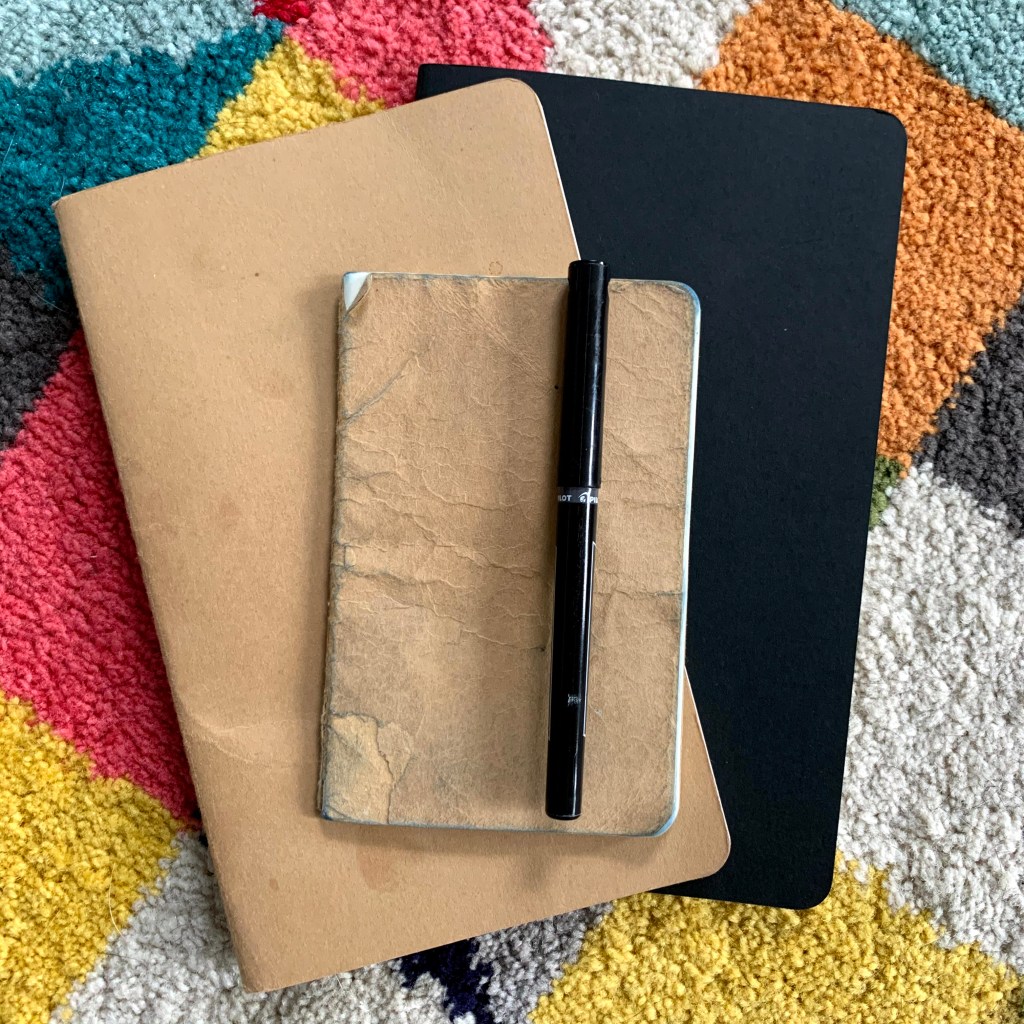
I have 3 distinct journals and ways I use them to keep a journal and journal practice:

  1. Pocket notebook: Small Moleskine notebook I keep in my back pocket with me at all times. Pen in my pocket to write down little ideas I have them or things that stick out in a podcast, book, random conversation. When I stop to write in my formal diary each day, I reflect on notes I wrote in it that day and day before.
  2. Note taking notebook: Large sized Moleskine notebook I bring with me if I’m intently reading something, going to a meeting, or need a place to track more thorough note like ideas or topics. I will typically take a photo of this and load it into my Microsoft OneNote in some sort of order for log. I also keep this next to me and check it as I do my formal diary each day.
  3. Formal diary: Large sized Moleskine Notebook (black in picture). Eventually will migrate to a hard covered notebook. This is where I write each day at the end of my work day and reflect on what stood out. Throughout the day I’ll pull it out and jot down more reflective thoughts. I make a point to fill at least 1 page in it each workday. I try to do this on the weekends also but find it’s important for me to be lax on weekends. This is where the depth of my mindfulness increases in keeping a journal. I expand upon thoughts I might not share but want to dive into. I take those ideas and sometimes will formulate a blog post on it or use it in coaching or training. I also paste pieces of magazines or things I print out into it. Right now I’ve been taking pictures of a specific scene and joining them together into a collage as a ‘joiner‘.

This practice will evolve and change over time but I intend to continue a habit that increases my own awareness and focus.

Widen then Narrow

As we generate ideas, form phrases to guide us, articulate the narratives we choose, we can benefit from a process to generate those ideas or phrases.

Here is a recommendation on how to clarify a current narrative and an ideal narrative when you realize the story you’re being told isn’t getting you what you want. This may be a story you’re telling yourself about who you are, a story you’re being told by those around you about the work you do, a story being told to you about a specific relationship.

We live out of these narratives. They carry weight. Be sure you choose the right stories to live into.

During this process we want to recognize the 4 personas that can arise (Madman, Architect, Carpenter, Judge). We want to let the Madman run free in the widening and allow the Architect and Carpenter to do their job in the narrowing. The Judge is only brought in after we have a draft to truly polish. Don’t let the Judge stop you from beginning or diving in deep.

If you are using this to develop a mission statement, life theme, or similar, do this through once as it is. If you’re doing this to clarify a narrative do it twice. Once for the current narrative and once for the ideal narrative.

We will flip between widening (gaining ideas, spreading out the circle) and narrowing (picking specific ideas, and closing in the circle).

What you need to begin:

  • Timer (I just use my iPhone timer)
  • Pen/pencil
  • Notebook or several full pieces of paper
  • Stack of note cards or 2×4 inch pieces of cut paper
  1. Widen: Set a timer for 5 minutes. On a piece of full paper or in journal, list out all the words/phrases that come to mind when you think of the topic (narrative, mission statement, theme). No wrong answers here. Let the madman run free.
  2. Narrow: Set a timer for 3 minutes. On separate note cards, rewrite 6 of the words or phrases from your list. Pick only 6 (Don’t worry, we will come back to your big list later)
  3. Widen: Set a timer for 1 minute. Set the six note cards out where you can see all of them. For a minute, turn over one of the cards and write all that you can about that word or phrase to deepen it. When that 1 minute is up, move to the second card and do the same for a minute. Repeat until you’ve spent 1 minute on all 6 cards.
  4. Narrow: Set a timer for 5 minutes. Go through the 6 cards and make a new card for any words or phrases that stick out. Even if its repeating the same word, re-write it on a new card. You will discard the original 6 cards and go forward with as many as you generate here. Ideally combining the cards into more succinct and narrow phrases/words.
  5. (Optional) Widen: Set a timer for 3 minutes. Go back to your original list and add any words or phrases not represented in your current set of cards which resonate with you. Make a new card for each idea you want to resurrect from the original list.
  6. (Optional) Narrow: Set a timer for 1 minute. Set out 6 blank cards in front of you. Spend 1 minute per card clarifying and refining any of the ideas you’ve previously gathered. Do not look at the other cards you’ve been using. Simply write for 1 minute on a card about a single idea as you remember it. After the minute, immediately move to the next card and spend a minute writing about a new idea you remember. Do this for all 6 blank cards.
  7. Widen: Set a timer for 5 minutes. Pick 1-3 of the cards from previously and write continuously about those specific ideas on a piece of paper. Write constantly until the timer runs out. If you don’t have anything to write, simply write about why you don’t have anything to write. Don’t stop writing until the 5 minutes is up.
  8. Narrowing: Try to pick 1-3 phrases or words that capture the narrative. At this point, do your best to piece together a phrase to use even if it’s just a draft. Bring this draft to a coach or trusted person to think through it and claim a final theme, statement, narrative

Remember this is all about clarifying a complex idea or concept. You may not come to a perfect definition or phrasing and that’s fine. Move forward with it and continue to refine as a you go.

I initially heard of the 6-Minute Turn from brainstorming I did at Fuller Youth Institute.