Ibram X. Kendi gave this beautiful image for understanding racism and the shame it can come with in our society while he was on Brene Brown’s Podcast.
Racism is a charged word but it doesn’t have to bring us shame.
Realizing our own racism is like realizing that it is constantly raining and we are soaking wet.
It feels so crummy to realize you’re wet but at the same time it makes a lot of sense. Immediately you look for an umbrella or run for safety but we must make sure we pick up the right umbrella and do what we can to point out the clouds that are raining on us.
Once we realize we’ve been running from realizing we are wet, we can’t stop but running towards making it stop raining.
As we grow towards synergy and effective collaboration, we must realize and manage the perceptions others have of us.
If we hope to serve, collaborate, partner with, lead we need to be smart about managing perceptions. First we must be sure we are acting out of our own strengths and life theme but after we are certain we know who we are, we can work to manage perceptions of others.
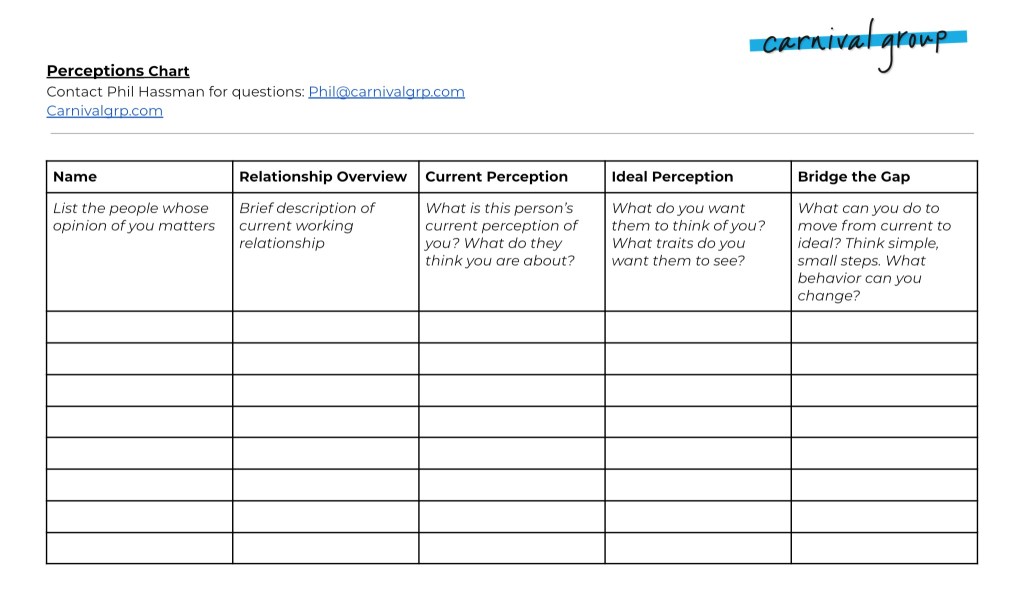
At Carnival Group, we’ve created a chart to help our clients begin this process of noticing and tracking the perceptions of others. In addition to tracking, we must take action to bridge the gap of what the current perception someone has to how we hope for them to see us.
Feel free to copy the Google Doc link HERE to make your own edits or use this as a guide to begin uncovering how others perceive you to works towards a more synergistic collaboration with others!
Our responses, what we say, how we say it, how we react, matter to those we respond to.
They either build up and or tear down.
When someone shares something difficult, our response could urge them towards comfort or shame. Especially if someone shares something vulnerable or personal, our response can make a diffference.
We often will say or do something without considering the impact.
One way I remind myself of the impact is looking for the “meta-message” I am delivering.
-meta (as a prefix): denoting position behind, after, or beyond.
We might say “Everything will be okay.” The meta-message here is “You are overreacting.”
We don’t mean to say that but if someone were to internalize the message and reflect on what that means of them, they could turn to shame with it. We could participate in tearing them down.
Consider the meta-message you deliver. It matters.
I recently heard of this concept from Ed Batista in his Stanford MBA course which he recently made a webinar version available FOR FREE! I was inspired to share especially in the current movement of racial reconciliation and dismantling of racist systems in the US and around the world. Our words and responses matter even more in these critical times of change.
If we truly want to improve ourselves and grow, we must stop to evaluate our performance or pace of growth.
Sometimes we can get by with simply thinking of on our drive home or as we fall asleep but if we truly care about improving in an area, we should follow a path of evaluation.
That path can mold and change as it goes but I’m using the below questions to evaluate my effectiveness and performance after each coaching session or team development workshop I run. It will change within the next month but for now it’s useful.
Rate 1-5 (1 being poorly done, 5 being excellently done)
I knew when we needed to stop and work on something specific, before we continued with the agenda I had planned?
Did my client learn today? Was there an ‘aha’ moment?
I was able to keep my client on track
I was able to help my client produce truths and solutions
I was at a loss for words
Did I control the process or did the process control me?
Did I conclude by summarizing the key points of the meeting and setting expectations for the next one?
Did I give the client all I could?
Did I talk too much?
Free Form Question and rating: How well did I do? What could I have done differently?
We all have moments where we realize we could have responded, interacted, behaved more collaboratively. Often this retrospective realization does not happen quick enough for us to remedy the moment or maintain effective collaboration.
We also are quick to judge those who behave differently than our default.
It is our own responsibility to be aware of other’s tendencies, preferences, and needs. We must grow ourselves if we truly wish to interact more effectively.
The DiSC Workshop we’ve created in Carnival Group is intended to increase this ability of self and other awareness.
It is most effectively done in a team of people with a coach guiding you through but posting it here for anyone to use as a resource.
Let’s all take the responsibility to expand our self and other awareness and learn to adapt to and appreciate other’s collaboration styles.
We are running this workshop in person with a client this week and are excited to look for other ways to offer this workshop. Check out more at carnivalgrp.com/disc
“We become exactly like the nightly local-news shows — if it bleeds, it leads — and our stories center on violent Black bodies instead of the overwhelmingly majority of nonviolent Black bodies.” – Ibram X. Kendi in How to be an Antiracist
My neighborhood has experienced violence occasionally, in the last 2 years we’ve lived here. We had a string of drive by shootings down the street directed at a single home but that has since stopped.
Even though my evening conversations with neighbors while securely walking my dogs, sharing ice cream with the kids across the street, laughing with friends in our home with windows wide open, stopping my car to chat with a neighbor after they wave when I drive by, superbly out weigh, the one time I watched from my home office as a young Black man stuck his body out a moving car to fire a dark, heavy pistol 6 times into my neighbors home…When a not so close friend cautiously asks, “Do you feel safe in your neighborhood?”, knowing it is because my neighborhood is mostly Black, I can’t help but think of that fear gathering moment.
I do feel safe in my neighborhood. As a white man it takes a lot for me not to feel safe. That is my privilege which I irreverently subconsciously and consciously try to protect.
I must separate that individual and their violent act from other Black bodies.
I am comfortable separating that violent act from my neighborhood when my friend questions the comfort and safety of my neighborhood. I quickly say “We’ve had some crime in our neighborhood but it’s always targeted and never been anything we’ve directly experienced…” I remove the act from our neighborhood as a whole and I believe it.
Black bodies must also not hold the weight of the individual acts of violence we see, hear about, or experience.
I will do the work to free Black bodies from the oppressive racist assumption that they are more dangerous than a White body. I will confront those thoughts as they arise. Process them with trusted friends. Observe the impact of those thoughts when they escape my head into my actions. And work to advocate for policies and laws that stand for the freedom of Black bodies.
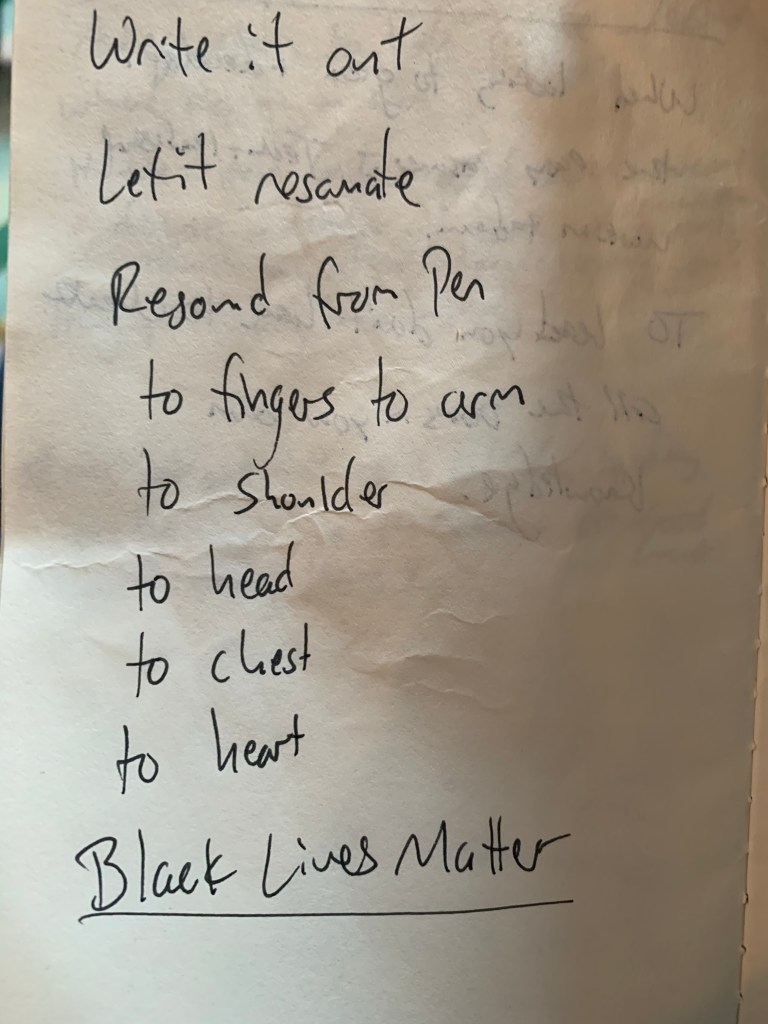
Black Lives Matter.
I am continually learning and making mistakes as I write and process my own racism and work towards an anti-racist life and position. Feel free to contact me if anything I have written carries racism or oppression. I will work to change that. hassman.phil@gmail.com
What people wouldn’t want to be here or in this conversation?
Who did we not make space for?
What voices are we missing in this discussion?
Who am I not considering in this strategy?
Hopefully we expand the circle but also sometimes we realize what we have is specific and designed for a specific audience. We must sit with that before we proceed.
This is important in strategic thinking and implementation but also important when working on our own development.
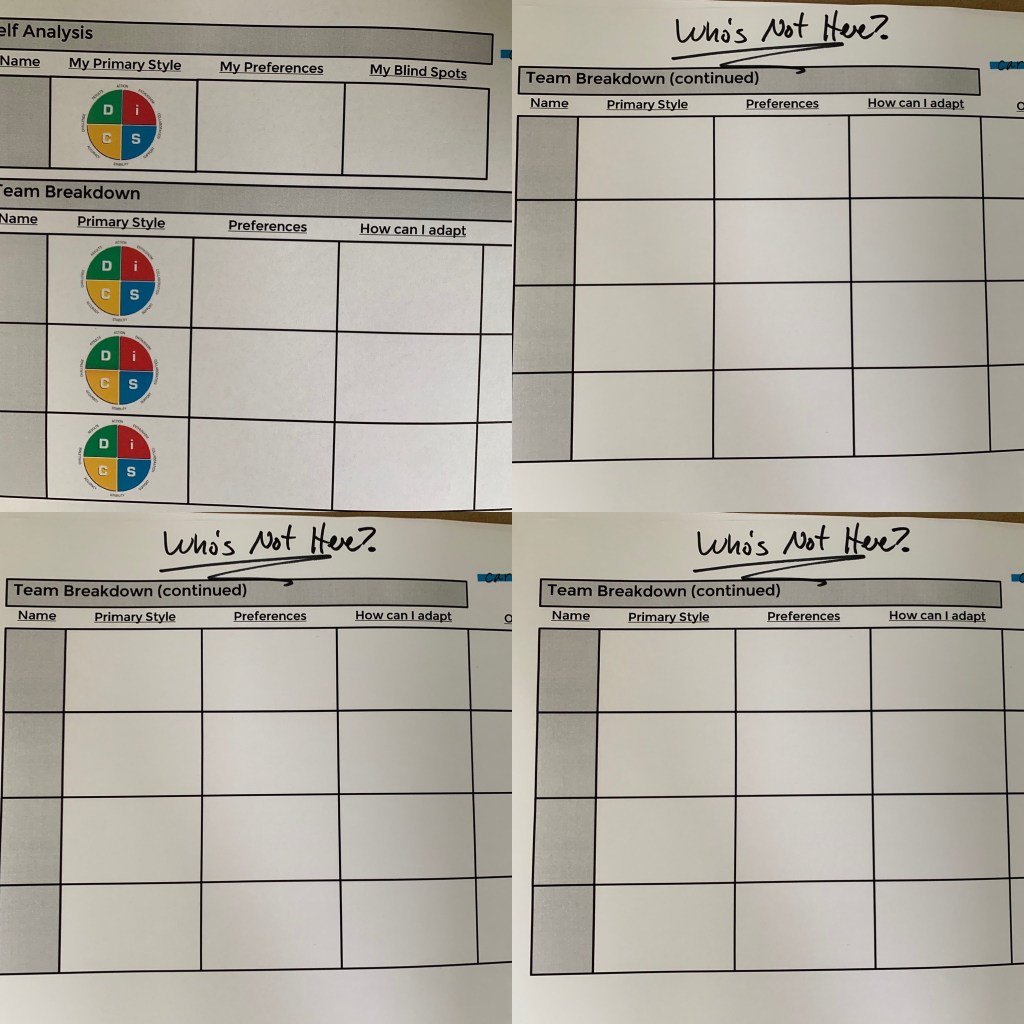
With my work on DiSC workshops, we have a page to analyze your own and others primary styles and how to adapt to each other, increasing collaborative effectiveness. The page only has space for 3 “others.” Today I added several extra pages to reach beyond the first round of people to consider and imagine who else should I try to adapt for. Who’s not here?
The good problem is too many scraps from our work to pick up in the moment.
The challenge is we might want to pick up the scraps before we even begin making them.
How often do you find yourself not starting something because concern or judgement of what it will require afterwards?
Of course, we shouldn’t make un-necessary mess especially if others have to clean it up without agreeing to it…
But if we make a mess in a controlled environment or even just make scraps with our work, most often, we are doing work of value.
To physically create or manipulate something, whether words, images, paint, structure, is to commit to it. Just as I type these words on my computer, they don’t carry as much meaning as if I were to write them out, cut out each word, move that word around on a canvas, and paste it down.
Of course, we can’t always physically manipulate something but even if this is a metaphor, we must be trying to leave behind some sort of scraps.
It can then be just as much of a joy to pick up those scraps afterwards as they represent real value added. Real ideas put out there. Real art actualized. And we may even find something new in the scraps
But first, don’t fret about picking up scraps before you’ve created them. Simply create some scraps and go from there.




 phil invites