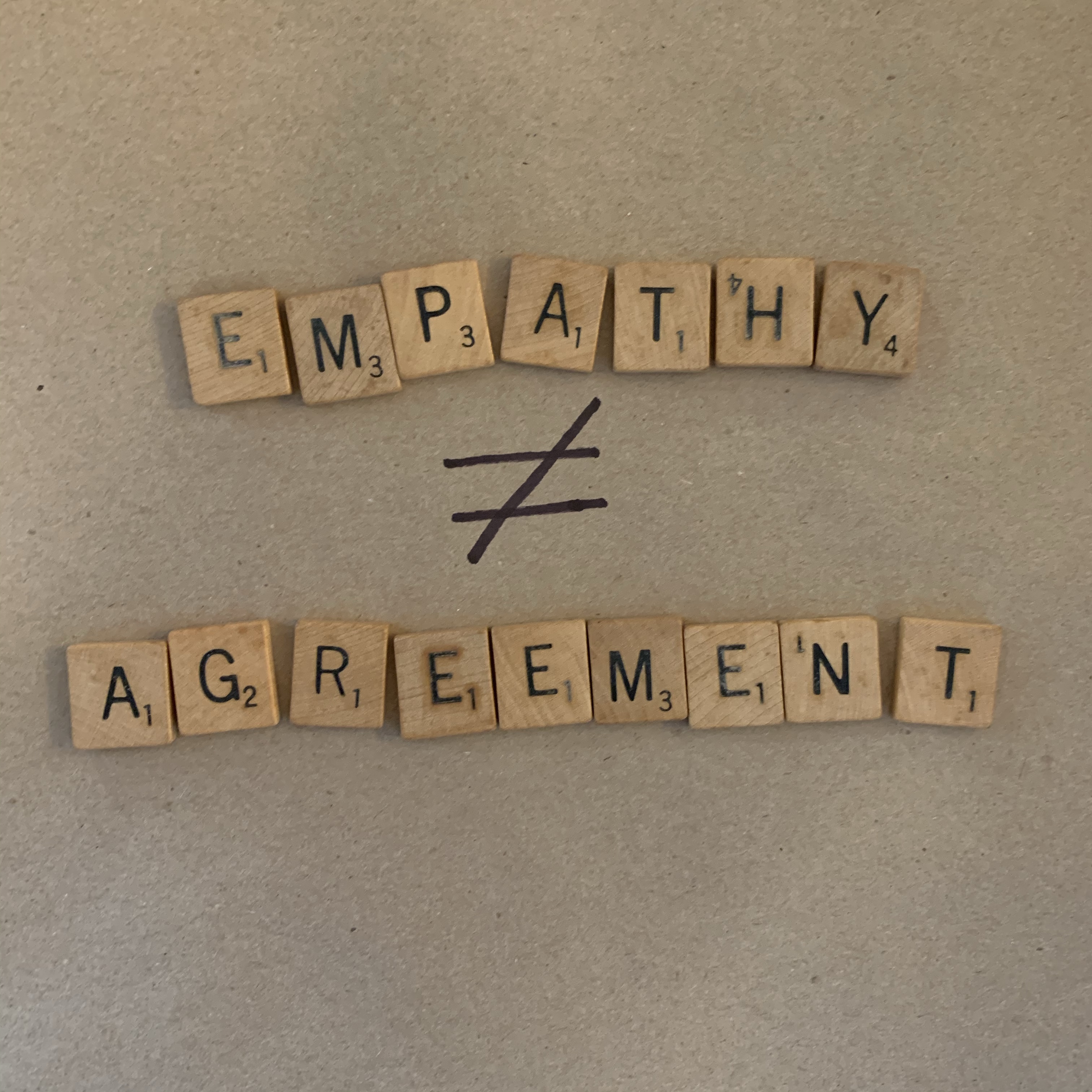
Often I have thought that in order to empathize with someone, I must also agree with them. I realize now, it just takes more work to empathize with someone you don’t agree with.
Theresa Wiseman’s research describes empathy as four fold:
- See the world as others see it
- Understand another’s current feelings
- Non-judgmental or suspend judgement
- Communicate the understanding
I can think of TWO reasons we incorrectly believe that empathy equals agreement.
ONE: In high stress situations, our emotions rise to the front without as much regulation. Often I find that my emotions get in the way of these four attributes of empathy.
I may be angry and therefore display that frustration or hold onto that anger so I do not suspend judgement. I may feel hurt myself and therefore hold back the vulnerability to communicate what I understand of the other person.
We must find a ways to regulate our emotions. Ed Batista describes humans as “leaky” in that our emotions cannot be fully held back but we must be able to regulate them. Meaning we need to ensure the emotion we are expressing fits the surrounding culture, give ourselves time sand space to recognize early signs of our emotions to begin processing that, and identify where those emotions rise from in order to ensure we display them appropriately.
TWO: We think if we truly listen to someone else, we may actually agree with them and we don’t want to feel the shame of changing our mind. If we allow ourselves to empathize, it could be psychologically dangerous for us. So we equate empathy and agreement to avoid empathy.
Brene Brown describes shame at one end of a continuum and the other end of the continuum is empathy.
We can step closer to empathy by showing vulnerability ourselves. By demonstrating vulnerability, we allow for processing of our emotions and thoughts. Of course this must be done with tact and with appropriate regulation as described above. When used well, vulnerability can make a tense moment move towards empathy on all sides. If we can’t move it towards empathy, it will naturally go towards shame and get us away from truer understanding and appreciation.
Don’t let shame be the deterrent from more truth and wholeness.
If we hope to be empathetic, we don’t have to agree. Empathy does not need agreement to exist. We can see through a person’s lens, be non-judgmental (and yet still be vulnerable and regulate our emotions), understand someone’s feelings, and find ways to communicate back to them what we understand, all without agreeing with what they say.
Inspired by this idea from Ed Batista’s Self Coaching FREE Webinar recordings and his post dissecting Accountability and Empathy.
 phil invites