Tell Not Just What’s Working but Why

Giving feedback is a key piece of coaching someone or simply doing life with someone. We may avoid giving feedback because it can be difficult to articulate or we are concerned of the relationship.

If you find yourself mustering the courage to give direct feedback, positive or critical, be sure you explain why that thing worked or it didn’t work.

We increase our feedback game when we can explain to the person why something worked or didn’t work. This might take extra research or knowledge gained over time.

If someone gives a presentation and they delivered well. Our easy response is, “You did a great job! Keep it up!” This does little for that person. It may encourage them but ultimately understanding why it went well builds truer confidence.

Be specific about what is working and why it’s working. If you’re receiving feedback from someone, ask them more about it. Maybe ask, “What did you enjoy most about this?” or “Why do you think people appreciated the presentation?”

The “what” is helpful but even more helpful in feedback is the “why.” Maybe we can give someone the “why.” Maybe we can ask for the “why” when receiving feedback. Maybe we need to seek out the “why” after we receive that feedback.

I’m working to research and learn more so I can continue to provide people with better “why” in feedback.

I know I also have a blog talking about how “What” questions are more valuable than “Why” questions. “What” is often the starting point for a little more into “why.”

I first heard of this idea from Sally Perkins (a storyteller and storytelling coach) when she was on the Practice First Podcast. I recommend listening!

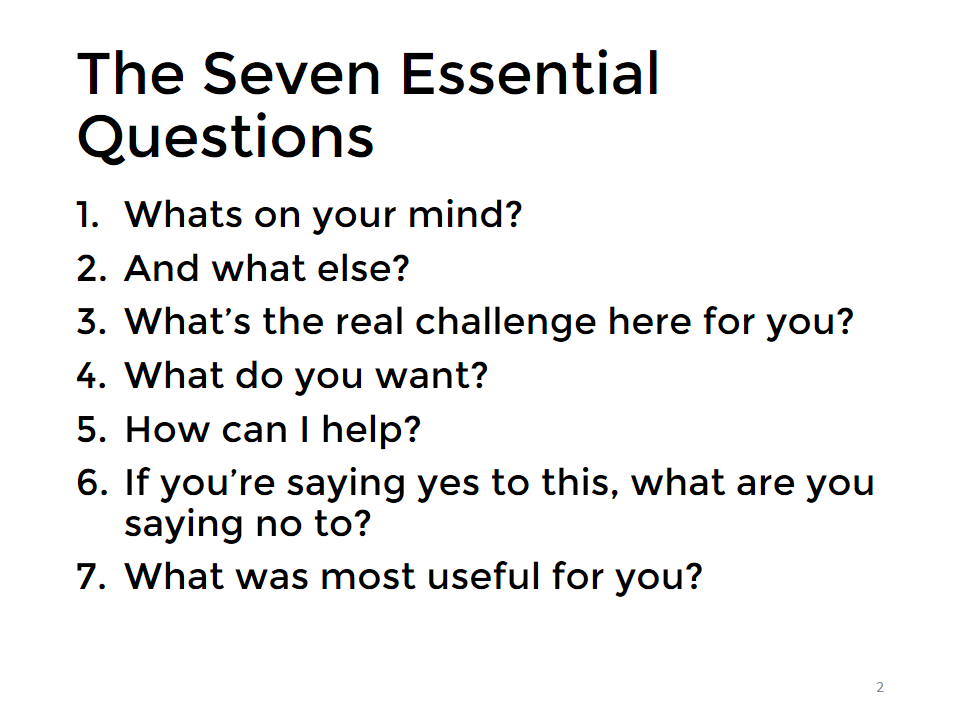
3P’s To Focus Conversations

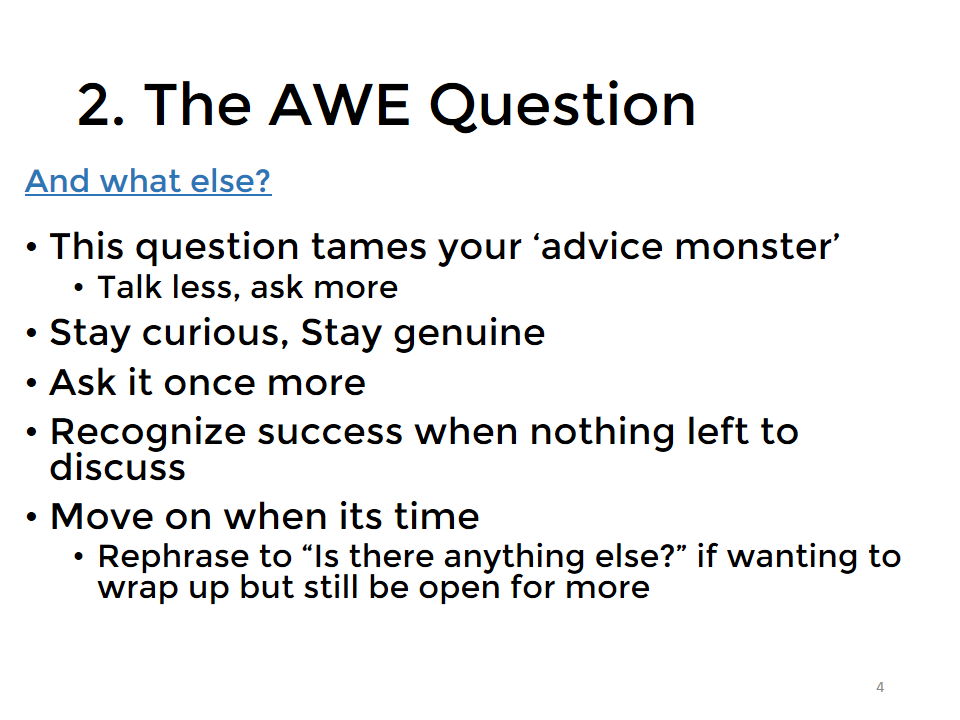
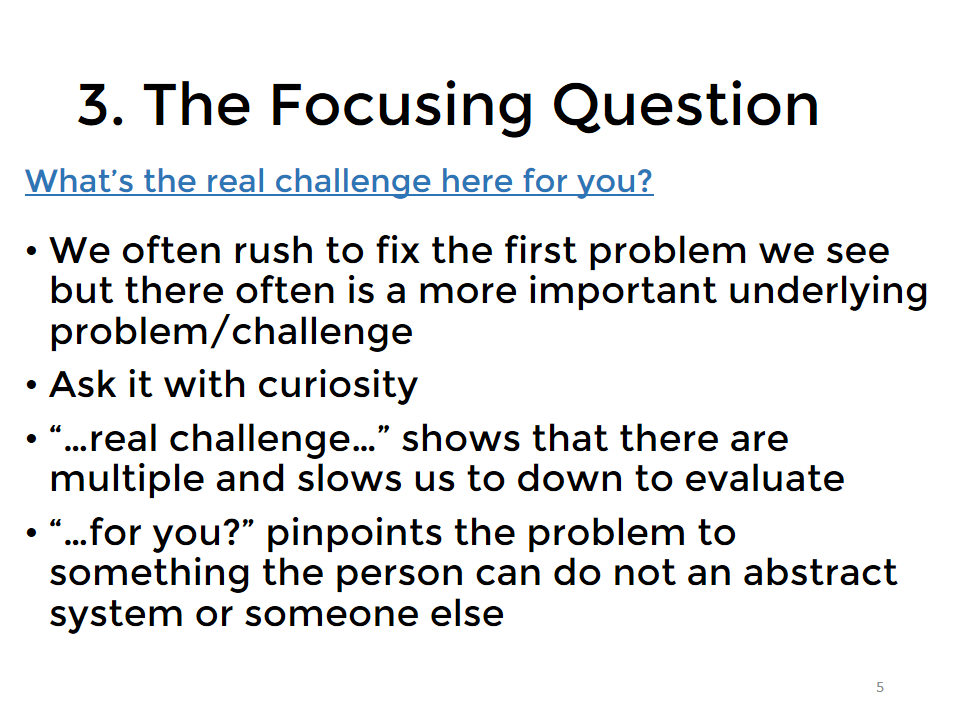
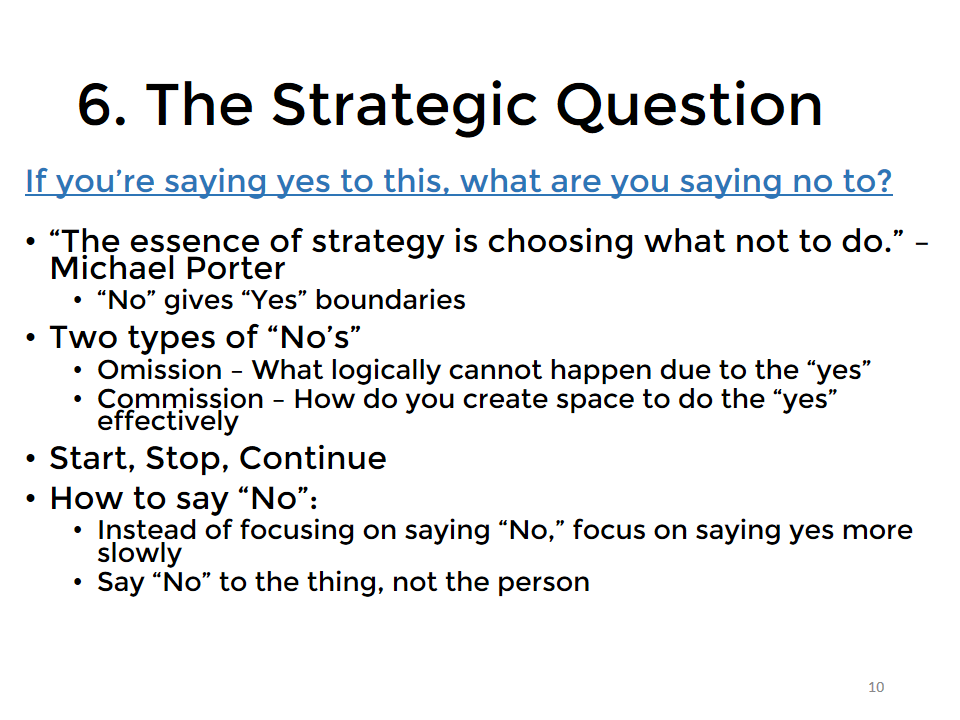
As we coach others or simply help people solve problems, it’s easy to over complicate the situation or get distracted by too many options.

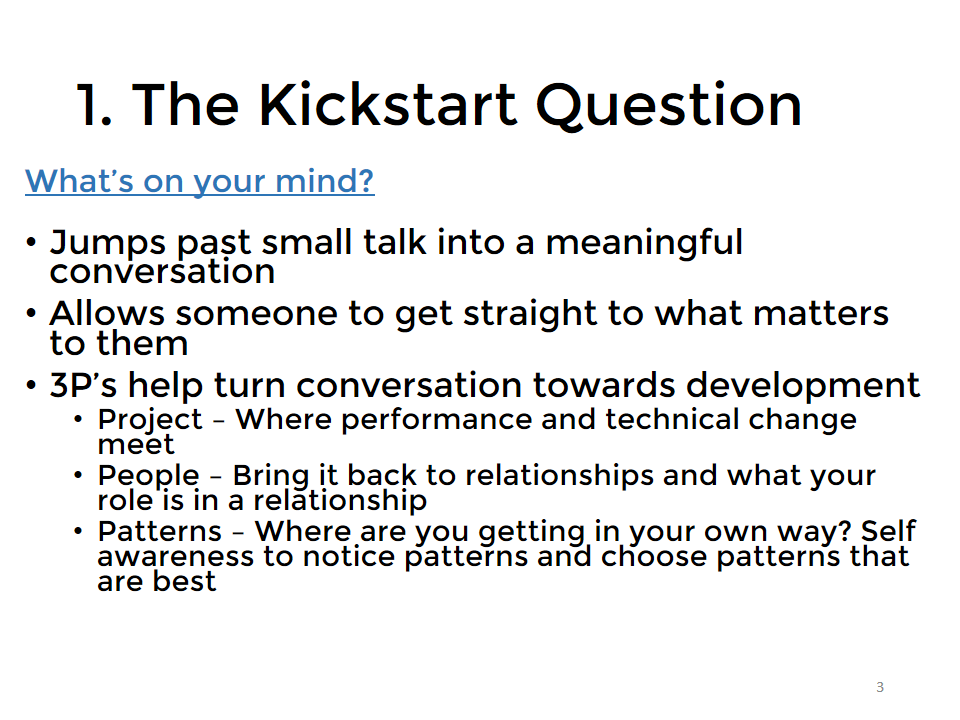
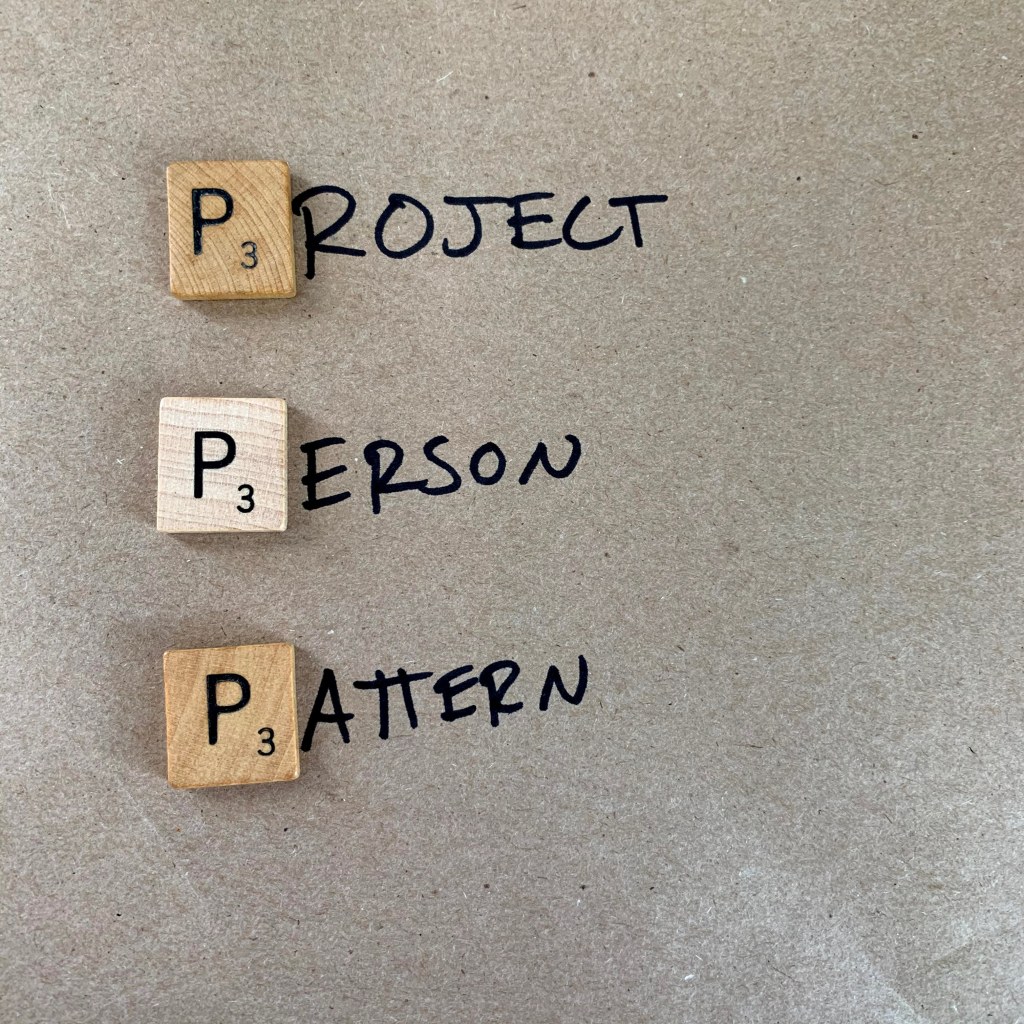
Use the 3P’s to focus your conversations and questions you ask.

Consider how you can focus in on the Project the person is talking about or struggling with. This is where technical or strategic conversations happen.

Ask questions about the Person or people involved in the situation and help the other person see how to impact the relationship.

Challenge the person to modify their Patterns in life to get the outcome they desire.

Rather than just dance around the complaining or the struggle, get specific and use one of the 3P’s to help you get there.

Of course anything we do in coaching someone else, we should apply to ourselves. Find ways to use the 3P’s to help yourself solve problems and focus in on resolutions.

I first read about the 3P’s from Michael Bungay Stainer in his book The Coaching Habit. I’ve written more about The Coaching Habit on my blog HERE.

Want vs. Need Narratives

The stories we tell ourselves shape our perceptions and hence our attention and then our actions and then what we get. Narratives are powerful in our life and they are everywhere.

From what we put on when we get up, to how we talk to our co-worker, to what we career decisions we make. Narratives drive our world.

If we are attempting to overcome a challenge, we may have the following narratives:

“I just need them to get out of the way!”

“I need their help to get through this.”

The key word here is need.

Need is an extrinsic attribute. It relies on someone else. Because of this it automatically puts us in a victim mindset. We can’t do anything but explain our need and let them do what they want.

An alternative is “want.”

“I want their help on this.”

This is an intrinsic motivator. The story is flipped from being about the other person needing to do something to us having a desire for something.

By simply turning this story around a little, we gain even more power in it. We see ourselves as a key part of solving the problem.

The challenge then becomes a motivator rather than a burden.

What challenges are you facing?

Where can you move from a “need” narrative to a “want” narrative?

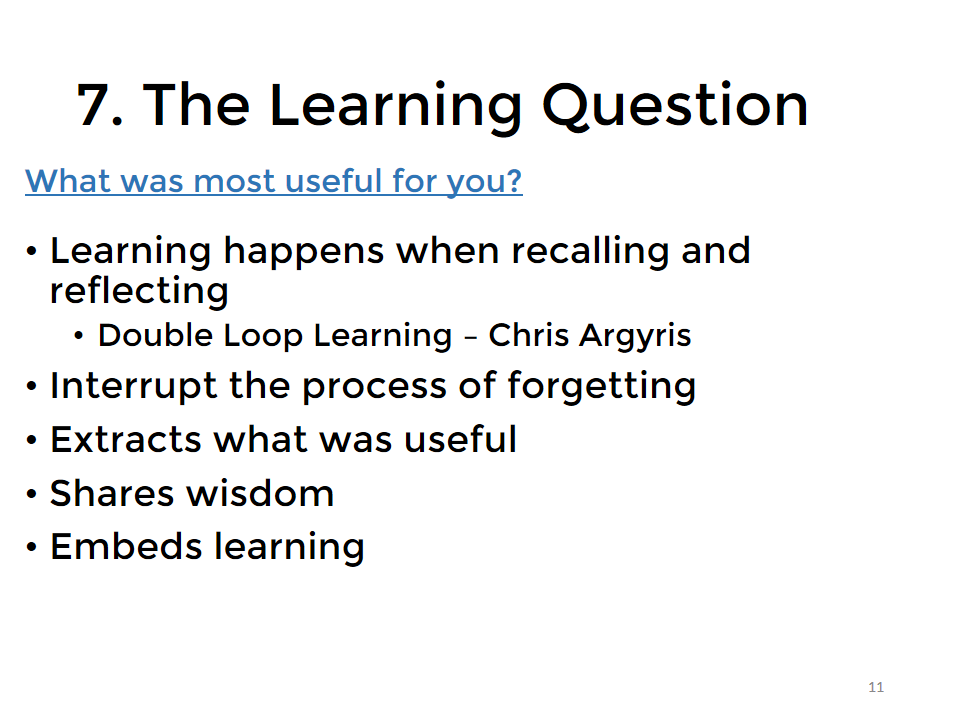
Simple Mindfulness Practice

Meditation or other mindfulness practices seem daunting. How can you quiet your entire mind!? I don’t have time to sit in silence!?

Each morning I make space for 5 minutes of meditation and it is a habit I cherish each day as a workout to increase my mindfulness.

Mindfulness helps us create an internal environment suitable for high effective work and living. Helps us regulate our emotions, build resiliency, increase our ability to focus, make us more aware of subtleties around us…

Meditation is a workout. It might even feel stressful at times. That’s the point!

While meditating we should improve our awareness and focus. We focus on a specific object (breathing, phrase…), notice when we lose focus, release that loss of focus, and gravitate back to original object of focus. It’s a workout!

Here’s a simple start to building your own mindfulness practice:

Set a timer for 5 minutes (or more)

Get comfortable sitting. Close your eyes or keep them slightly open.

Bring your attention to your breath. If helpful count each in and our breath and focus on the breathing or counting.

As you gain focus on breathing, lift your focus to what you’re thinking about. Think of it like watching cars move through a four way stop. Acknowledge those thoughts and consider how you feel about them. Notice those feeling and thoughts as if they are moving through the intersection and outside of yourself.

When you want to release a thought, simply imagine yourself blowing a bubble and release the thought and emotions as if they were a bubble floating away. If they come back, let them sit and then release them again.

Bring your attention back to your breath as needed and as your focus gets too busy.

Repeat the cycle.

The goal is to have a mental workout. Help your mind grow in its ability to be simultaneously aware and focuses.

I learned of this tactic from The Mind of The Leader Book and the app included. Ed Batista has a couple great posts on mindfulness. I recommend this one with a thorough breakdown on getting started.

Make the Most of Your Attention

Where you attention goes, energy flows.

This is true with mountain biking. As you approach an obstacle, if you focus on the obstacle, you’ll surely hit it head on. If you instead look past it at where you hope to, you’ll find the best route around it, through it, or over it.

Our attention drives the results we get because it drives what we focus. We must set up ourselves to have attention on the best things:

  1. Set our environment/rhythm/structure to direct our attention well. Austin Kleon talks about finding a Bliss Station.

2. Set ourselves up to regulate our emotions (Not control or minimize but regulate). For me, this is mindfulness exercises, keeping a journal, getting proper sleep, eating and drinking well, and making room for regular exercise. Ed Batista says our emotions are attention magnets. Our feelings will draw our attention quickly and readily. They are designed to do this. We shouldn’t try to control this but instead consider how to regulate and build in space and time to process and consider these emotions.

3. Build narratives which honor where we are going. The stories we tell ourselves guide our attention and build out the life we will lead. Ensuring we question the narratives we hear and state keeps this in check. We need an overall narrative that can overpower those minor, negative stories as they arise. This is where a Life Theme comes in. When we claim who we are and where we are going, we squash those other narratives. Of course we claim it as if it’ll be true forever but know that it will change and build in re-evaluation.

4. The comparison of others will steal away our attention. We can’t turn this off but we must keep it in check. There are platforms engineered to draw us into social comparisons. Keep it in check.

A lot of this requires slowness to be built into our lives. We can’t add it all at once. Start with mindfulness practices. Then take on a journal practice. Then build out a Life Theme. Then design a work setting or daily routine that sets you up well. Then quit those social comparison habits not serving you well.

In the end, know that attention is what will help you be who you want to be and it also could pull you away from who you want to be.

These points were based on Ed Batista’s article “A Better Information Diet.”

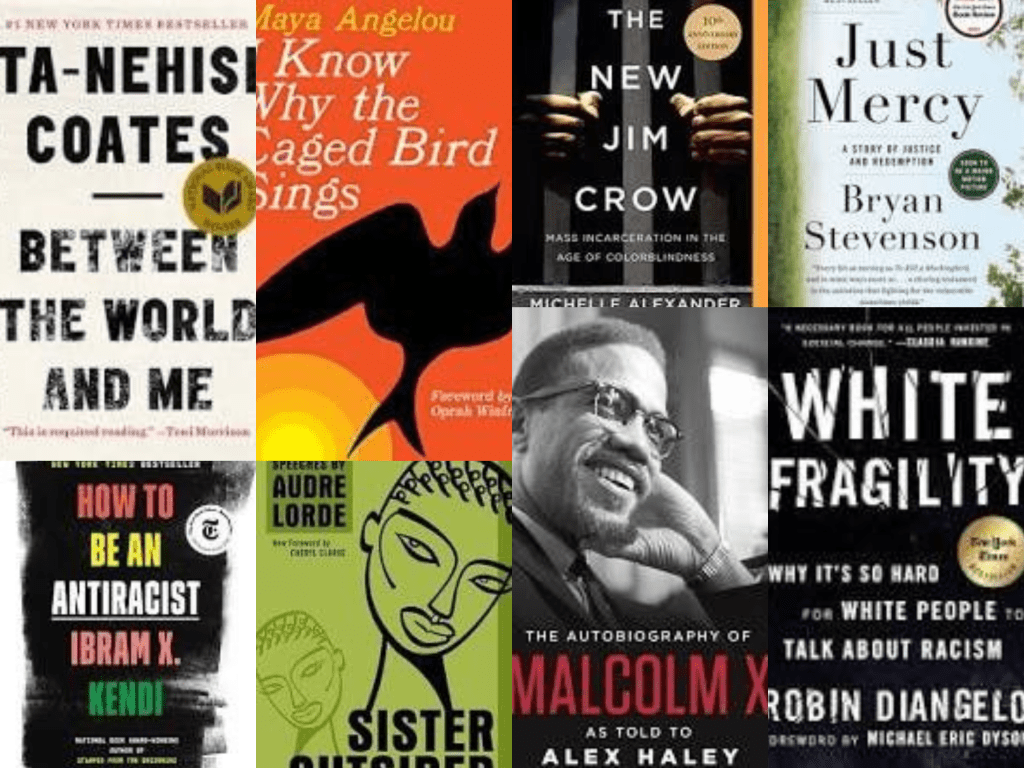
8 Books – Understanding Racial Injustice

Reading captivating and informative news or posts online have huge value. They ensure we keep ourselves connected to the pulse of change and the momentum of society’s movement towards racial equality. Here in the United States, there is new information being posted hourly on how to be involved in our country’s wide awakening to racial injustice. Reading books has allowed a space for me to process the news and posts I consume while gravitating towards deep personal change and plan civically.

Here, I recommend 8 books which have helped me in my journey towards understanding racial injustice and working towards racial equality. I must recognize my recommendations come from my white American male perspective. I intend to center on Black, Indigenous, People of Color (BIPOC) voices in this time of pushing toward justice and equality. To that end, much of my post below is shaped by Ibram X. Kendi’s article in the Atlantic and recommendations from my local social justice movements.

This recommendation should not be used as a checklist but an inspiration to begin or continue to fight racial injustice everywhere. This list is not complete, and not universal to all, but I hope in hearing my journey you are encouraged in your own. Links to each book below are to a non-profit book provider supporting local book stores but I recommend you find a local bookstore to support.

  • Just Mercy by Bryan Stevenson: As I work towards gaining understanding and awareness of racial injustice, it is important for me to start with stories of people’s experiences. Just Mercy: A Story of Justice and Redemption is written by the lawyer Bryan Stevenson who has spent his career serving those in most need. He focuses on the story of Walter McMillian, who was a young man sentenced to death for a crime he insisted he did not commit. Just Mercy showed me the challenges that Black people face in the criminal justice and policing system. I felt things I had never felt before and was moved by this powerful, real life, tragic story of how the justice system fails Black people in the U.S. The book was recently made into a motion picture starring Michael B. Jordan and Jamie Foxx. You can watch it for free right now for a limited time.
  • White Fragility by Robin DiAngelo: If you are a person who is white, looking to expand your knowledge in racial justice but limited on time to read, I recommend starting with this book. This book (written by a white author) sets the stage for what it means for white people (specifically white Americans) to step into allyship for racial justice. This book helped me realize the nuanced ways white supremacy, my own racism, and racial bias affect my actions. In addition to pointing out where other people and systems are propagating racial inequality, I begin to see even the smallest things I do which perpetuate racial injustice and inequality. After reading this book, I have language to explain my movement away from contributing to the toxic systems of White Supremacy. This book comes from an author who is white and is written to a white audience. It should be noted that Ibram X. Kendi recommends BIPOC individuals to read Locking Up Our Own by James Forman Jr in substitution for White Fragility.
  • How to Be an Antiracist by Ibram X. Kendi: Racism feels like such a dangerous, scary word. It is a hazardous system and it is highly ingrained into our society. This book helped me see racism for what it is and how racism functions in society and at times, through me. I would not have a good definition for racism or antiracism before reading this book. I understand from this book there is no neutral party in racial inequality. You cannot be between justice and injustice, equality and inequality. The author, Ibram X. Kendi, powerfully breaks down how racism shows up around us and how we can strive towards antiracism.
  • Between the World and Me by Ta-Nehisi Coates: Ta-Nehisi Coates generously shares with readers his advice to his son on how to go forward in life as a Black man in the United States. This memoir breathed life into my desire to be an ally and advocate for my Black friends, neighbors, and fellow humans. Coates does not sugar coat any piece of his experience and leaves a raw, historical, and wise outline of his experience being a Black man in the United States.

The following books are ones I have not yet read but are next on my reading list:

  • I know Why the Caged Bird Sings by Maya Angelou: My own reading reflects the voices of mostly white men, Black men and white women. I hope to learn the story of a Black woman from Maya Angelou’s iconic memoir. The memoirs of the past and present can lead our feelings and actions after realizing our own and society’s racism.
  • Sister Outsider by Audre Lorde: These essays of Audre Lorde are said to bridge connections from understanding racial inequity to gender and sexuality inequity. This book is next on my list, as it speaks from the intersection of race and sexuality, adding voices from the LGBTQ+ community.
  • The Autobiography of Malcolm X: Malcolm X was not discussed much in my formal education around race. I am reading this on recommendation of others and looking to understand Malcolm X’s transformation. From that I hope better to understand the Black Lives Matter movement and the history of social justice in the United States.
  • The New Jim Crow by Michelle Alexander: I’ve often heard and understood (from Just Mercy), the criminal justice system in the United States disproportionately incarcerates Black men. This book is said to reveal how deeply rooted and preserved systemic racism is in the United States. I hope to understand the systems at play and see my role in standing against this racial injustice.

If you would like to discuss anything you read in the list above, or have other recommendations, please do not hesitate to reach out. I am always looking to learn from and alongside others.

As we all stand for equality and oppose injustice and inequality we have a lot of work ahead, both civically and within ourselves. Ibram X. Kendi on Brene Brown’s Podcast, Unlocking Us, put words to how I’ve felt. “Once we realize we have been running away from recognizing our own racism, we cannot help but run towards antiracism and racial justice.”

HUGE shout out to a team of people who helped me revise, edit, and write this post. Grateful to have these people as friends: Amber Ellis, Phil Moreland, Anna Tragesser, Cody Tragesser (Twitter, IG), and Steven Durr.

I initially wrote this for a newsletter for the company I work for, Eurofins, as a piece of our Equality Driving Excellence Initiative.

How to be an Antiracist Book Reading Plan

Ibram X. Kendi’s book, How to be an Antiracist, has shown me new insight of the racist policies of the society I am a member of as well as the racist ideas and behaviors I exude at times.

Racism feels like such a dangerous, scary word. It is a hazardous system and it is highly ingrained into our society. This book helped me see racism for what it is and how racism functions in society and at times, through me.
I would not have a good definition for racism or antiracism before reading this book.
I understand from this book there is no neutral party in racial inequality. You cannot be between justice and injustice, equality and inequality. Ibram X. Kendi, powerfully breaks down how racism shows up around us and how we can strive towards antiracism

I’ll be generating a reading plan for the book with questions to process during and after each chapter. This post will be updated as I add other chapters and questions.


Ibram X. Kendi shares an overview of the topics discussed in his book at a Berkeley Othering and Belonging Institute event. I highly recommend spending the ~35 minutes listening (6:00-43:30 in video) to him talk through key principles outlined deeper in the book. Specifically him dissecting why we should recognize ourselves as racist.


Before Reading:

  1. What was your first memory recognizing the difference in race?
  2. How would you define “racism”? And “Racist”?
  3. Do you see yourself as a racist? Explain briefly

Read Chapter 1: Definitions

  1. What aspects of Ibram Kendi’s definition of racist aligned with your previous description?
  2. What aspects of Ibram Kendi’s definition of racist WAS NOT aligned with your previous description?
  3. What aspects of the definition of antiracist seem WITHIN REACH? For you? For our society?
  4. What aspects of the definition of antiracist seem DISTANT and OUT OF REACH? For you? For our society?
  5. Close by reading this, from page 22, together and let the weight sit with 2 minutes of silence and individual thought: “We can knowingly strive to be an antiracist. Like fighting an addition, being an antiracist requires persistent self-awareness, constant self-criticism, and regular self-examination.”

Read Chapter 2: Dueling Consciousness

  1. On page 27, “Americans have long been trained to see deficiencies of people rather than policy.” What assimilationist assumptions do you make which live off this idea that its people’s responsibility, not the system they are in?
    • “Assimilationist = One who is expressing the racist idea that a racial group is culturally or behaviorally inferior and is supporting cultural or behavioral encroachment programs to develop that racial group”, Page 24
  2. Put this phrase from page 33 in your own words: “The White body no longer presents itself as the American body; the Black body no longer strives to be the American body, knowing there is no such thing as the American body, only American bodies, racialized by power.”
  3. What else stuck out to you from this chapter?

Read Chapter 3: Power

  1. Where do you notice or see “racial power creating racist policies out of raw self-interest” (Page 42) in our country, your city, your own home?
    • Know that a policy can be as large as a law and as localized as a rhythm or practice we partake in
    • List out the driving self interest for each of your noticings.
  2. What is one self-interest you can de-prioritize to promote the benefit of others?
    • Or what self-interest can you point out and ask others to de-prioritize? 

Read Chapter 4: Biology

  1. What racial “microaggressions” do you experience or partake in most days? (Page 46; Microaggression = “Brief, everyday exchanges tha send denigrating messages to certain individuals because of their group membership”)
    • Recognize and accept either by writing or verbally explaining how each of these racial “microaggressions” are actually racial abuse.
  2. What do you see which makes you think we are in a “post-racial” world? (Page 53)
  3. Explain in your own words why stopping to identify by race, the route of assimilationist, is not enough. (Page 53)

Read Chapter 5: Ethnicity

  1. What narratives do you imagine show up in someone when they are consistently asked “Where are you from?” (Page 62)
  2. What are examples of anti-racism when considering ethnicity? Definition of ethnic antiracism on page 63-64: “To be antiracist is to view national and transnational ethnic groups as equal in all their differences. To be antiracist is to challenge the racist policies that plague racialized ethnic groups across the world. To be antiracist is to view the inequities between all racialized ethnic groups as a problem of policy.”

Read Chapter 6: Body

  1. “What could happen based on my deepest fears mattered more than what did happen to me. I believed violence was stalking me – but in truth I was being stalked inside my own head of racist ideas.” (Page 72) What fears show up for you regarding the bodies of Black people or physical presence of Black people? What memories arise when you consider those fears?
    • “…our stories center on violent Black bodies instead of the overwhelming majority of nonviolent Black bodies.” (Page 77)
  2. What narrative would build in you if you were constantly told it was your responsibility to calm fears of violent cops? “Black people are apparently responsible for calming the fears of violent cops in the way women are supposedly responsible for calming the sexual desires of male rapists. If we don’t, then we are blamed for our own assaults, our own deaths.” (Page 76)
  3. How can you move towards an antiracist position? (Page 79)
    • Segregationist: “Black neighborhoods are war zones and need tough policing and mass incarceration of super-predators.”
    • Assimilationist: “Super-predators need tough laws and tough love from mentors and fathers to civilize them back to nonviolence”
    • Antiracist: “Black people, like all people, need more higher-paying jobs within their reach.”

Read Chapter 7: Culture

  1. What cultural standards and hierarchy do you notice around you?
    • “Whoever makes the cultural standard makes the cultural hierarchy. The act of making a cultural standard and hierarchy is what creates cultural racism.” (Page 83)
  2. What are aspects of your own culture which you cannot imagine doing without?
  3. “All cultures must be judged in relation to their own history, and all individuals and groups in relations to their cultural history, and definitely not by the arbitrary standard of any single culture.” (Page 90)

Read Chapter 8: Behavior

  1.  Think of examples of behavioral racism. What must you do to oppose those both in yourself and in your environment?
  2. Where have you potentially benefited from oppression due to behavioral racism?
    • Assimilationist: oppression has degraded the behavior of oppressed people (Page 96)
    • Antiracist: deracialize behavior. Behavior is something people do, not races do. (Page 105)

Read Chapter 9: Color

  1. How would you define beauty?
  2. Consider this concept and how could you adjust your definition of beauty?
    • “To be antiracist is to build and live in a beauty culture that accentuates instead of erases our natural beauty.” (Page 113)

Read Chapter 10: White

  1. What policies or systems can you think of which are equitable and antiracist while also benefiting ordinary White people?
    • “…ordinary White people benefit from racist policies, though not nearly as much as racist power and not nearly as much as they could from equitable society.” (Page 129)
  2. Consider the most unjust or inequitable systems in our society. Who benefits the most from these policies or systems? (be specific about the systems and the people)
    • “Racist power, hoarding wealth and resources, has the most to lose in the building of an equitable society.” (Page 129)
  3. What policies or practices do you notice often deemed as racist against White people?
    • How does this quote frame or re-frame that policy or practice? “…they (White racists) define policies not rigged for White people as racist.” (Page 130)

Read Chapter 11: Black

  1. What shift is needed for you to remove racialized negative behavior in your own perspective? If tough to think of this, consider what racialized negative behavior you hold in your perspective? (Page 137-138)
  2. How do you connect these two ideas: Powerless defense shield (page 139, 140) and assimilation (page 142)

Chapters 12-18 to come as they are ready…


Listen more to Ibram X. Kendi at any of these podcasts. Unlocking Us, Armchair Expert

Check out Ibram X. Kendi’s reading list suggestions

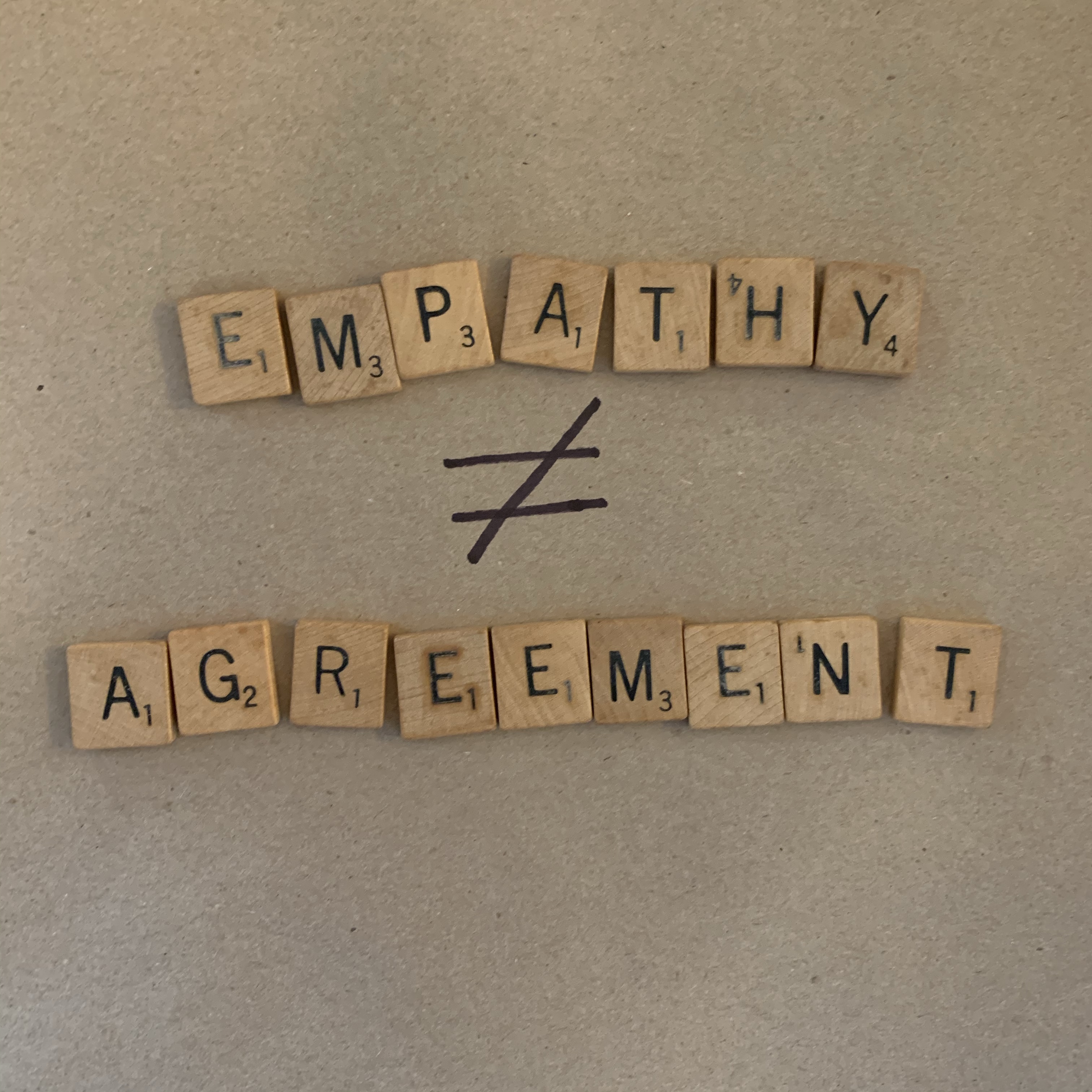
2 Reasons We Incorrectly Believe Empathy Means Agreement

Often I have thought that in order to empathize with someone, I must also agree with them. I realize now, it just takes more work to empathize with someone you don’t agree with.

Theresa Wiseman’s research describes empathy as four fold:

  1. See the world as others see it
  2. Understand another’s current feelings
  3. Non-judgmental or suspend judgement
  4. Communicate the understanding

I can think of TWO reasons we incorrectly believe that empathy equals agreement.

ONE: In high stress situations, our emotions rise to the front without as much regulation. Often I find that my emotions get in the way of these four attributes of empathy.

I may be angry and therefore display that frustration or hold onto that anger so I do not suspend judgement. I may feel hurt myself and therefore hold back the vulnerability to communicate what I understand of the other person.

We must find a ways to regulate our emotions. Ed Batista describes humans as “leaky” in that our emotions cannot be fully held back but we must be able to regulate them. Meaning we need to ensure the emotion we are expressing fits the surrounding culture, give ourselves time sand space to recognize early signs of our emotions to begin processing that, and identify where those emotions rise from in order to ensure we display them appropriately.

TWO: We think if we truly listen to someone else, we may actually agree with them and we don’t want to feel the shame of changing our mind. If we allow ourselves to empathize, it could be psychologically dangerous for us. So we equate empathy and agreement to avoid empathy.

Brene Brown describes shame at one end of a continuum and the other end of the continuum is empathy.

We can step closer to empathy by showing vulnerability ourselves. By demonstrating vulnerability, we allow for processing of our emotions and thoughts. Of course this must be done with tact and with appropriate regulation as described above. When used well, vulnerability can make a tense moment move towards empathy on all sides. If we can’t move it towards empathy, it will naturally go towards shame and get us away from truer understanding and appreciation.

Don’t let shame be the deterrent from more truth and wholeness.

If we hope to be empathetic, we don’t have to agree. Empathy does not need agreement to exist. We can see through a person’s lens, be non-judgmental (and yet still be vulnerable and regulate our emotions), understand someone’s feelings, and find ways to communicate back to them what we understand, all without agreeing with what they say.

Inspired by this idea from Ed Batista’s Self Coaching FREE Webinar recordings and his post dissecting Accountability and Empathy.

A Journal is a Key Tool

Just like a hammer is necessary if you’re framing a house. A drill is necessary to do woodworking. A key is necessary for opening a door.

A journal is necessary to developing ourselves.

We can use the back of a screw driver to knock in a nail every once and a while but if we have to hit nails day after day, we’d better have a hammer.

We might act similarly using our memory as the screwdriver to temporarily drive home our own development. Nothing replaces the act of journaling.

Journaling or keeping a diary is a reminder that development is more than a 1 hour every month thing. It is ongoing and process you will partake in every day. It can help you measure growth and development. Journals help you remember what was said or what you thought about. It is a place for you to collaborate with yourself and think as if there were two of yourselves processing information.

Rhythm is important.

If you do not know where to start, begin with gratitude or what you are proud of for the day and let it grow from there. It doesn’t have to ever be perfect or complete, it just needs to be you. It never needs to be shared or explained or just needs to resonate with you.

Inspired by Austin Kleon’s thoughts on why he keeps a diary